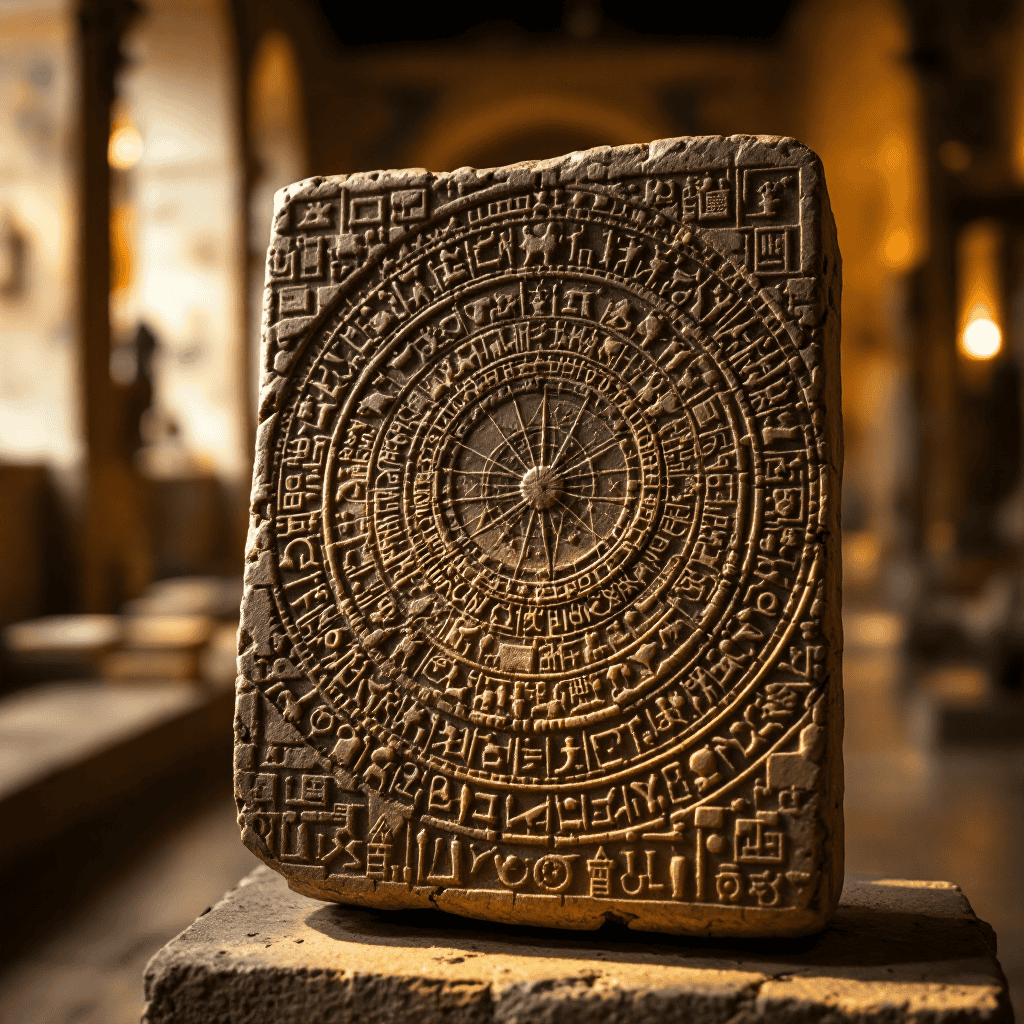
Astrology in ancient religions was not entertainment or superstition. It was the language through which civilizations conversed with the divine. From the Babylonian temple priests who tracked Venus cycles to the Egyptian pharaohs who aligned pyramids with Orion, celestial observation formed the backbone of sacred practice. The sky was not decoration. It was instruction, a living scripture written in light and motion that governed ritual timing, agricultural cycles, and the structure of worship itself.
Modern culture dismisses astrology as novelty horoscopes, but ancient religions treated the heavens as a divine interface. They built calendars around solstices and equinoxes. They timed ceremonies to lunar phases. They encoded zodiacal symbolism into temple architecture and holy texts. The distinction between astronomy and astrology did not exist. Both were expressions of the same pursuit: reading the mind of God through the order of creation.
This integration appears across every major civilization. The Babylonians created the zodiac. The Egyptians aligned their gods with constellations. The Hebrews encoded celestial timing into scripture. The Mayans built observatories that tracked planetary cycles with precision. The Vedic tradition structured ritual around planetary periods. These were not isolated practices. They were universal patterns, suggesting that astrology emerged independently as humanity’s first attempt to map the relationship between cosmic order and earthly experience.
Babylon: Where Astrology Became Doctrine
The Babylonians did not invent stargazing, but they systematized it. By the second millennium BC, their priests had divided the sky into twelve sections, creating the zodiac as we know it today. These were not random divisions. They corresponded to the twelve lunar cycles within a solar year, anchoring human time to celestial rhythm.
Babylonian astrology was state religion. The king consulted celestial omens before declaring war. Priests tracked Venus to predict agricultural yields. Eclipses were read as divine warnings. The famous Enuma Anu Enlil, a seventy tablet compendium of celestial omens, recorded thousands of years of observation linking planetary movements to earthly events. This was not mysticism. It was data collection on a civilizational scale.
Their method was correspondence. As above, so below. If Jupiter brightened, expansion was favored. If Mars turned retrograde, conflict loomed. The planets were not controlling fate. They were revealing pattern, the same pattern embedded into the fabric of reality itself. The Babylonians understood what modern science is rediscovering: that cosmic forces influence terrestrial conditions through gravitational, magnetic, and electromagnetic resonance.
The mechanism behind these correlations, the specific frequencies through which planetary alignments modulate Earth’s energetic field and how those shifts imprint on developing consciousness during gestation, is detailed in Chapter 8 of Master Thyself. What the Babylonians mapped symbolically, modern magnetobiology is beginning to measure directly.
Egypt: The Sky as Spiritual Cartography
Egyptian religion encoded astrology into every layer of practice. The temple at Dendera features a complete zodiac wheel carved into its ceiling, positioning the twelve signs around the celestial north pole. This was not decoration. It was cosmology rendered in stone, a map of the soul’s journey through incarnation.
The Egyptians linked their gods directly to constellations. Osiris was Orion. Isis was Sirius. The annual flooding of the Nile, which sustained Egyptian civilization, was predicted by the heliacal rising of Sirius. When the star appeared on the eastern horizon just before dawn, the flood was days away. This celestial event became the anchor of their calendar, the start of the new year, and the symbol of resurrection itself.
Their cosmology went deeper. The body was seen as a microcosm of the heavens. The spine was the axis mundi, the world pillar connecting earth and sky. The pineal gland, which they called the seat of the soul, corresponded to the pole star. The twelve cranial nerves mirrored the twelve zodiacal divisions. This was not poetic metaphor. It was anatomical theology, the belief that human structure reflects cosmic architecture because both were designed by the same intelligence.
The pyramids themselves encode this knowledge. The Great Pyramid aligns with true north to a precision modern engineers struggle to replicate. Its shafts point toward Orion and the pole star. The Sphinx, many researchers now argue, was originally a lion carved during the Age of Leo, a monument to astrological time itself. The Egyptians did not worship the stars. They recognized them as the visible expression of divine order, the same order that animated their bodies and governed their souls.
Hebrew Scripture: Astrology Encoded in Sacred Text
Christianity and Judaism today often distance themselves from astrology, but the Hebrew Bible is saturated with celestial symbolism. Genesis 1:14 states explicitly that the lights in the heavens were made for signs and seasons. The word for signs, owth, carries the connotation of omens and markers. The heavens were not passive scenery. They were active communication.
The twelve tribes of Israel mirror the twelve zodiac signs. The high priest’s breastplate bore twelve stones, each corresponding to a tribe, arranged in a pattern that some scholars link to zodiacal order. Philo of Alexandria, writing in the first century, explicitly connected the breastplate to the cosmos, calling it a microcosm of the heavens. The tabernacle itself was arranged in a twelvefold camp structure, each tribe positioned according to celestial correspondences.
The story of the Magi in Matthew 2 is direct biblical validation of astrology. These were not kings. They were Persian or Babylonian astrologer-priests who read the birth of Christ in a celestial sign. God did not rebuke them for stargazing. He used a star to guide them to the Messiah. That is not coincidence. That is divine endorsement of celestial observation as a legitimate path to revelation.
Even the Christian liturgical calendar remains astrological. Easter is calculated as the first Sunday after the first full moon following the spring equinox. Christmas falls near the winter solstice, the symbolic death and rebirth of the sun. Advent begins four Sundays before the solstice. These are not arbitrary dates. They are astronomical markers, remnants of a tradition that never left the faith, it simply changed vocabulary.
For those exploring how biblical astrology intersects with sacred timing and consciousness, the pattern becomes unmistakable. The heavens were never forbidden. They were the first scripture, written before words existed.
Vedic Tradition: Jyotish as Sacred Science
In the Vedic tradition of India, astrology was never separated from religion. Jyotish, the science of light, was considered one of the six Vedangas, auxiliary disciplines essential to understanding scripture. To study the Vedas without celestial knowledge was to miss half the message.
Vedic astrology operates on a sidereal zodiac, anchored to the fixed stars rather than the seasonal equinoxes. This reflects a cosmology in which time is cyclical, not linear. The Yugas, vast cosmic ages, turn like wheels within wheels. Humanity moves through phases of spiritual clarity and decline, guided by planetary periods called dashas. These are not predictions. They are environmental conditions, windows in which certain karmic patterns ripen and others remain dormant.
The Vedic calendar structured daily life around celestial timing. Muhurta, electional astrology, determined auspicious moments for marriage, travel, and ritual. Nakshatras, the twenty-seven lunar mansions, mapped emotional and psychological states across the lunar cycle. Every action was timed to harmonize with cosmic rhythm, the same principle encoded into Hebrew Sabbath observance and Islamic prayer times aligned with solar position.
The planets themselves were treated as living intelligences, devas with distinct personalities and domains. Saturn brought discipline and limitation. Jupiter expanded wisdom and fortune. Mars activated courage and conflict. These were not arbitrary assignments. They reflected observable correlations between planetary cycles and human experience, the same correlations modern research into magnetobiology and gravitational influence is beginning to validate.
Mayan Astronomy: Precision as Devotion
The Maya built their entire civilization around celestial observation. Their calendar systems tracked solar, lunar, and planetary cycles with accuracy that rivals modern computation. The Tzolkin, a 260 day ritual calendar, synchronized human gestation with cosmic rhythm. The Haab, a 365 day solar calendar, governed agriculture. The Long Count tracked epochs spanning thousands of years.
Their observatories were architectural instruments. El Caracol at Chichen Itza features window alignments that track Venus at its extreme positions. The Temple of Kukulkan casts a serpent shadow on the equinoxes, marking seasonal transitions with theatrical precision. These were not monuments to ego. They were teaching tools, public demonstrations that the heavens move in knowable patterns and that human life gains meaning through alignment with those patterns.
Venus held particular importance. The Maya tracked its synodic cycle, 584 days from one appearance as morning star to the next, with obsessive precision. They linked this cycle to warfare, timing battles to Venus’s heliacal rising. This was not superstition. Venus cycles correlate with electromagnetic variations in Earth’s magnetosphere, subtle but measurable shifts that could influence mood, decision-making, and collective behavior. The Maya observed the effect long before the mechanism was understood. Understanding how celestial cycles translate into biological and psychological influence requires the synthesis presented in the biological mechanism of sacred secretion and the gravitational framework explored throughout this book.
Greek Philosophy: From Myth to Mathematics
Greek religion initially treated astrology as foreign import, absorbed through contact with Babylon and Egypt. But Greek philosophers transformed it. Plato described the cosmos as a living being, its soul woven through the celestial spheres. The Timaeus presents creation as geometric harmony, each planet resonating at a specific musical interval, the music of the spheres.
Pythagoras taught that number is the language of reality. His school linked planetary motion to mathematical ratios, the same ratios that govern musical harmony and geometric proportion. This was not metaphor. It was physics expressed through symbol. If the cosmos operates on harmonic principles, then planetary positions at birth could imprint a specific frequency pattern onto developing consciousness, the astrological signature.
Aristotle contributed the concept of the sublunary sphere, the region below the moon where change and corruption occur, influenced by the unchanging perfection of the celestial realm above. This cosmology persisted for over a thousand years, shaping how medieval Christianity understood divine order. The heavens were incorruptible, eternal, and mathematical. Earth was mutable, subject to decay, yet receptive to celestial influence.
Ptolemy’s Tetrabiblos, written in the second century AD, systematized Hellenistic astrology into a comprehensive framework. It was not a book of fortune-telling but a treatise on cosmic sympathy, the principle that all parts of creation resonate because they share a common source. This text became the foundation of Western astrology, transmitted through Islamic scholars and reintroduced to Europe during the Renaissance.
The Suppression and the Survival
Astrology’s integration into ancient religions was total. Then it fractured. The rise of institutional Christianity and later Enlightenment rationalism drove a wedge between sacred and scientific. Astronomy became respectable. Astrology became suspect. But the suppression was never complete.
Medieval Europe maintained astrology through alchemy and medicine. Physicians used astrological charts to diagnose illness and time treatments. Universities taught astrology as part of the quadrivium. Kings employed court astrologers. The Church condemned divination but tolerated observation. The line was intent. Using the stars to read divine will was acceptable. Using them to bypass divine will was heresy.
The Astronomicum Caesareum, a 1540 mechanical book commissioned by Holy Roman Emperor Charles V, contained rotating paper discs for calculating planetary positions and determining favorable days for action. This was not underground knowledge. It was state-sponsored celestial science, funded by the same powers that enforced doctrinal purity. The heavens remained legitimate as long as they pointed toward God, not away from Him.
Even as modernity dismissed astrology, elites preserved it. J.P. Morgan reportedly said millionaires do not use astrology, but billionaires do. Ronald Reagan timed speeches by astrological consultation. Silicon Valley founders have quietly employed astrologers for product launches and merger timing. The public narrative shifted, but private practice continued. What was taken from the masses was never abandoned by those who understood its utility.
For readers seeking to reclaim this knowledge, the patterns of suppression and distortion that separated sacred science from public awareness follow a consistent logic. The tools that empower self-knowledge are the first to be ridiculed, rebranded, or removed.
Why Every Civilization Arrived at the Same System
The cross-cultural consistency of astrology in ancient religions demands explanation. Civilizations separated by oceans and centuries developed twelve-fold zodiac systems, correlated planets with personality traits, and timed rituals to celestial events. Either humanity shares a common ancestor tradition, now lost, or the correlations are real enough that independent observers detected them.
Modern science offers plausible pathways. Magnetobiology confirms that humans sense Earth’s magnetic field, which fluctuates with solar and planetary activity. Gravitational variations, though subtle, influence biological development. The developing fetus is exquisitely sensitive to environmental conditions, and those conditions vary with celestial alignment. Birth timing captures a snapshot of Earth’s energetic state, encoding that pattern into the nervous system.
This is not determinism. It is predisposition. Astrology maps tendencies, not fate. The twelve signs are not boxes but spectrums, archetypal frequencies that describe how consciousness expresses through matter. Every culture that watched the sky long enough detected these patterns because the patterns are embedded in the structure of reality itself. Geometry is how space organizes. Astrology is how time organizes. Both are divine mathematics.
The ancient religions understood this intuitively. They did not need peer-reviewed studies to confirm that the cosmos influences life. They observed, recorded, and encoded their findings into ritual, architecture, and scripture. What modern science is now measuring with satellites and magnetometers, the ancients mapped with naked eye observation and symbolic language.
Reclaiming the Sacred Language
Astrology in ancient religions was never about predicting lottery numbers or finding soulmates through sun sign compatibility. It was a framework for understanding the soul’s relationship to cosmic order. The zodiac was a map of consciousness. The planets were archetypes. The houses were life domains. Together they formed a symbolic language through which the divine communicated timing, purpose, and pattern.
To reclaim astrology is not to return to superstition but to recognize that ancient wisdom often preceded modern science. The same civilizations that gave us writing, agriculture, and medicine also gave us astrology. Dismissing the latter while honoring the former is intellectually inconsistent. If they were right about geometry, metallurgy, and anatomy, they were likely right about the heavens too.
The full protocol for reading a natal chart as a psychological and spiritual blueprint, including the specific planetary configurations that correspond to awakening cycles, the timing windows aligned with lunar phases, and the practical methods for working with rather than against your astrological signature, is mapped in the complete framework presented in Master Thyself. The ancients preserved the map. Modern research is validating the terrain. What remains is for you to read your own chart with eyes unclouded by centuries of dismissal.
Your birth chart is not a cage. It is a set of parameters you entered with, the frequency your consciousness selected for this incarnation. Self-mastery is not escaping your chart. It is learning the instrument you arrived with and playing it with intention. The heavens do not control you. They reveal the conditions through which you chose to grow. That distinction changes everything.
The Pattern Holds
From Babylon to Egypt, from the Vedas to the Maya, from Hebrew scripture to Greek philosophy, astrology in ancient religions served one purpose: to align human life with cosmic rhythm. These traditions did not worship the stars. They read them as the visible signature of invisible law, the same law that governs growth, decay, renewal, and awakening.
Modern skepticism treats astrology as a relic of pre-scientific thought. But the data suggests otherwise. Cross-cultural consistency, emerging scientific validation, and the enduring private use of astrology by elites all point toward a conclusion the ancients already knew. The sky is not random. Its motion encodes information. And those who learn to read that information gain access to a timing system older than any institution, more precise than any doctrine, and more universal than any single faith.
The heavens were humanity’s first scripture. Every civilization that looked up long enough learned to read it. The language they developed was astrology. The institutions that followed tried to erase it, ridicule it, or control it. But the stars kept moving. The patterns kept repeating. And those who remember how to look can still see what the ancients saw: a cosmos alive with intelligence, structured by mathematics, and speaking through light.
You were born under a specific sky. That sky marked the energetic conditions of your arrival. Whether you choose to read that mark is up to you. But dismissing it as superstition is not skepticism. It is amnesia. The ancient religions remembered. The question is whether you will.