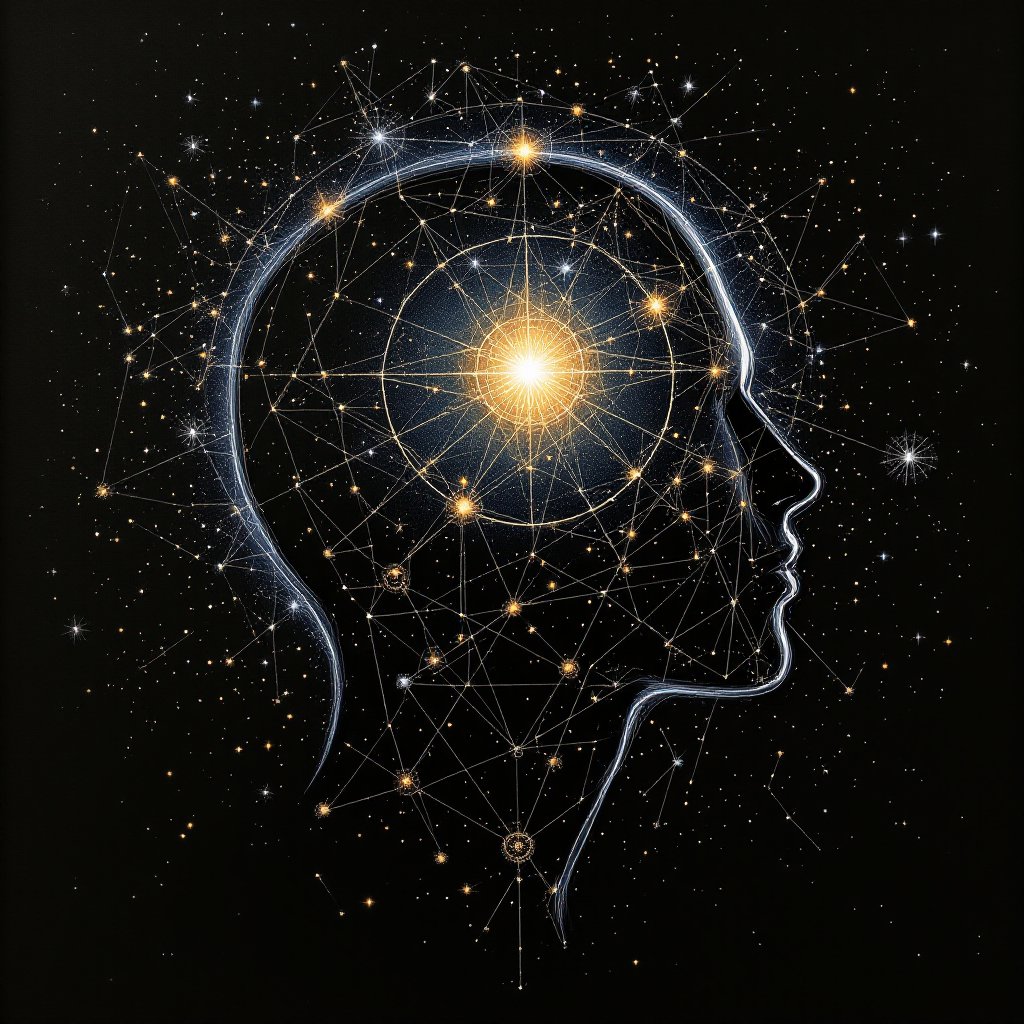
Are zodiac signs true to your personality? This question divides skeptics from believers, yet mounting evidence suggests the answer lies somewhere between folklore and physics. Across cultures and centuries, people have turned to the stars for insight into character and behavior. What skeptics dismiss as entertainment, researchers are beginning to recognize as an early personality mapping system that may correspond with measurable biological and environmental forces present at birth.
The confusion begins with language. When most people think of zodiac signs, they picture newspaper horoscopes, vague predictions written for millions. That is not astrology in its original form. True astrological personality profiling uses your exact birth time, location, and the positions of multiple planets to create a detailed character blueprint. The sun sign, what most people call their zodiac sign, is only one piece of a much larger map.
Modern psychology has validated what ancient astrologers claimed: personality clusters into predictable patterns. Whether you call them archetypes, traits, or temperaments, humans organize into recurring types. The Myers Briggs Type Indicator sorts people into sixteen categories. The Big Five measures personality across five spectrums. DISC identifies four behavioral styles. Each system assumes the same premise: behavior is not random. Astrology proposed this thousands of years earlier, using the sky as its reference point instead of questionnaires.
How Zodiac Signs Map Personality Traits
Each of the twelve zodiac signs represents a distinct behavioral archetype. Fire signs like Aries, Leo, and Sagittarius tend toward action and expression. Earth signs such as Taurus, Virgo, and Capricorn lean into structure and stability. Air signs including Gemini, Libra, and Aquarius often favor thought and communication. Water signs like Cancer, Scorpio, and Pisces typically align with emotion and intuition. These are not rigid categories but tendencies, the same way introversion and extraversion describe general patterns without dictating every choice.
A complete natal chart adds layers of complexity. Your sun sign describes core identity. Your moon sign reveals emotional patterning. Your rising sign shapes how others perceive you. Mercury influences communication style. Venus governs relationships and aesthetics. Mars drives ambition and energy. Saturn reflects discipline and life lessons. When combined, these placements create a multidimensional profile far more nuanced than a single sun sign alone.
This layered approach mirrors how modern personality science works. No single trait defines you. Instead, multiple dimensions interact to form a unique psychological fingerprint. The question is not whether personality can be categorized, psychology already affirms that it can, but whether the categories astrology uses correspond with observable reality.
The Scientific Case for Astrological Correlation
Research into gravitational and magnetic influences on biology offers one plausible mechanism. Studies published by institutions including Nature Communications have confirmed that Earth strength magnetic fields can influence biological systems at the quantum level through light sensitive proteins called cryptochromes. If developing cells respond to magnetic conditions, then variations in Earth’s field at the moment of birth could subtly influence neural development.
Earth’s magnetic field is not uniform. It shifts based on geographic location, solar activity, and planetary alignment. The moon’s gravitational pull drives tides and influences biological rhythms. The sun governs seasonal cycles and circadian patterns. While individual planets exert weak direct gravitational force, their combined resonance may create measurable fluctuations in Earth’s overall field. Ancient astrologers did not have magnetometers, but they observed correlations between celestial positions and human behavior across generations.
NASA research on plant growth in microgravity revealed that roots can detect gravitational forces as weak as 0.002 g, roughly five hundred times weaker than Earth’s surface gravity. If plant cells register such faint signals, the idea that a developing human nervous system might respond to subtle field variations becomes harder to dismiss. The womb is not a vacuum. It sits inside Earth’s magnetic envelope, bathed in the same forces that guide migratory birds and influence brainwave patterns in adults.
Neuroscience adds another layer. Research published in journals such as eNeuro demonstrated that human brainwaves shift in response to changes in Earth’s magnetic field. The same sensitivity that helps animals navigate may influence how neural pathways form during pregnancy. Birth timing captures a snapshot of those conditions, creating what some researchers call a gravitational birth imprint. Proven Zodiac explores how these environmental markers align with the archetypal personality patterns ancient observers mapped through the stars.
Empirical Studies on Zodiac and Personality
Statistical research offers cautious support. Michel Gauquelin’s work on planetary positions and professional success, known as the Mars Effect, found that elite athletes were born disproportionately when Mars occupied specific chart positions. Independent replications confirmed non random clustering beyond chance probability. While effect sizes were small, they exceeded statistical noise across multiple datasets.
Studies comparing astrological archetypes to established personality frameworks reveal overlap. Research by Sachs in 1998 analyzed over one thousand participants and found statistically significant correlations between zodiac signs and dominant psychological traits, particularly in emotional sensitivity and social behavior. Lobach and Fink’s 2005 study using personality measurement testing found that individuals who identified with their astrological traits scored consistently with traditional sign interpretations.
Birth timing research extends beyond astrology. A 2012 study from the UBC Sauder School of Business found that S&P 500 CEOs born in March and April were roughly twice as likely to reach executive level as those born in June or July. The mechanism was developmental, not cosmic: relative age advantages in school created compounding leadership opportunities. Yet the finding reinforces astrology’s core premise: birth timing leaves measurable imprints on personality and life trajectory.
More recently, a 2024 study using the UK Biobank dataset and published in PLOS ONE found that summer born individuals showed measurably thicker brain tissue in regions tied to memory and sensory processing. Season of birth appears to shape brain structure itself, not just behavior. A 2025 follow up study in PLOS Mental Health reported preliminary associations between summer birth and depression symptoms. These findings do not prove zodiac mechanics, but they validate the idea that environmental conditions at birth, including light cycles and magnetic variations, influence neural development in ways that persist across lifetimes.
The full synthesis of gravitational mapping, neural plasticity, and archetypal personality structure is detailed in Master Thyself by Alex Wolfram, where over forty years of research converge into a unified framework for understanding consciousness, timing, and the cosmic code written into your birth moment.
Why Zodiac Signs Feel Accurate
Critics often cite the Barnum Effect, the tendency to accept vague statements as personally meaningful. Generic horoscopes exploit this bias by using language broad enough to fit anyone. But dismissing all astrological personality insight as cold reading ignores a key distinction: comprehensive natal chart readings are not vague. They describe specific tension points, complementary strengths, and internal contradictions that generic statements cannot capture.
When someone reads their full chart and responds with recognition, the reaction differs from Barnum validation. They are not nodding at flattery or universal truths. They are encountering specific descriptions of inner conflicts, behavioral patterns, and psychological tendencies they have never articulated aloud. The specificity is what surprises them. This mirrors the reaction people have to Myers Briggs results or Enneagram profiles: the system describes something they already knew about themselves but lacked language to express.
Are zodiac signs true to your personality in a deterministic sense? No. Astrology does not override free will or eliminate environmental influence. But as a probabilistic model, a map of tendencies rather than certainties, the system holds up better than skeptics acknowledge. Personality is shaped by genetics, environment, and early conditions. Astrology claims that cosmic and magnetic conditions at birth form part of that environmental mix. If true, the chart becomes a timestamp, a record of the energetic field you entered at the moment of first breath.
The Ego as Avatar
In simulation theory, every player enters the game with a character build: baseline attributes, starting tendencies, default responses. You do not call that build an avatar in daily life. You call it your ego. The ego is not the enemy. It is the configuration you woke up inside. It has strengths, blind spots, recurring patterns, and stress responses that surface predictably under pressure. Those patterns are not random, and astrology has been mapping them for thousands of years.
Reading your natal chart is like opening the character manual for a game you have been playing your whole life without instructions. Suddenly the mechanics make sense. You see why certain situations drain you while others energize you. You recognize why specific relationship dynamics repeat. You understand that you are not broken, you are simply operating according to the design parameters encoded at birth. Understanding those parameters is the first step toward mastery. Self knowledge does not eliminate the pattern. It gives you leverage over it.
The same principle applies to numerology, which maps vibrational frequency through name and birth date. Every letter produces a measurable sound wave. Spoken aloud, your name generates a composite frequency pattern that is physically real. Cymatics, the study of how sound organizes matter, makes this visible: vibrate a surface at a given frequency and matter arranges into a specific geometric pattern. Change the frequency, the pattern changes. Ancient numerology assigned numbers to letters as a way of categorizing vibrational signatures before acoustic physics existed to measure them directly. The symbolism and the science describe the same terrain from different angles. For more on how sacred timing and lunar cycles interact with these vibrational patterns, the connection between cosmic rhythm and biological response runs deeper than most realize.
Astrology and Modern Personality Profiling
Astrology functions as an early personality classification system. It organizes recurring human tendencies into archetypal patterns. Modern psychology does the same thing using different language and methodology. The Myers Briggs Type Indicator sorts individuals across four paired scales to form sixteen personality types. DISC categorizes behavior into four patterns: Dominance, Influence, Steadiness, and Conscientiousness. The Big Five measures Openness, Conscientiousness, Extraversion, Agreeableness, and Neuroticism.
All four systems, including astrology, assume the same foundation: personality patterns are not random, individuals cluster into recurring types, and self awareness improves behavior. The debate is not whether personality can be categorized. Psychology already affirms that it can. The question is how those categories are identified: through questionnaires, behavioral observation, or celestial symbolism. Astrology predates modern psychology by millennia. If nothing else, its survival across cultures and centuries suggests that humans have always recognized patterned differences in temperament.
Strong Mars or Fire placements in a natal chart often resemble DISC Dominance or MBTI Extraversion. Prominent Venus or Air signatures may reflect Influence or Intuition preferences. Earth heavy charts mirror Steadiness and Conscientiousness. Saturn emphasis frequently parallels the Big Five trait of Conscientiousness. The symbolic language differs, but the structural logic is comparable. Both frameworks attempt to map the same terrain: human personality variance and the tendencies that shape how we process information, relate to others, and navigate challenge.
The difference lies in method. Personality questionnaires derive categories statistically. Astrology derives them symbolically. Yet both aim to explain why people experience the world differently and why certain behavioral styles recur across populations. When modern personality science discovers that birth season correlates with brain structure, or that relative age at school entry predicts leadership traits, it is confirming what astrology proposed symbolically: birth timing matters, and the conditions present at entry leave lasting imprints on development and character. The mechanism behind that connection, whether magnetic field variation, light cycle influence, or cerebrospinal fluid activation patterns, remains under investigation. But the correlation itself is harder to dismiss than mainstream narratives suggest.
What Astrology Cannot Do
Astrology does not predict specific events. It does not override personal choice. It cannot tell you whether to take a job, marry a person, or move to a new city. Those claims belong to fortune telling, not personality profiling. What astrology offers is insight into tendencies: how you process emotion, where you find energy, what challenges recur, and which environments support growth. It describes the instrument you arrived with, not the music you must play.
Misuse occurs when people treat their chart as fate rather than framework. A challenging Saturn placement does not doom you to failure. It signals where discipline and structure will teach the most. A strong Uranus does not force rebellion. It marks where you will resist convention and seek freedom. The chart is a map, not a script. Free will operates within the parameters, and those parameters can be worked with, refined, or consciously redirected. Self mastery is not escaping your chart. It is learning to play the configuration you were given with skill and awareness.
The line between observation and manipulation is critical. Scripture warns against divination not because discernment is wrong, but because outsourcing your future to another voice programs your mind to live out someone else’s version of your life. Prophecy conditions expectation. Expectation shapes perception. Perception influences behavior. Suddenly you are organizing choices around a script you never questioned. This is why biblical warnings focus on intent: reading the heavens for signs and seasons, as Genesis instructs, differs from using the stars to bypass personal responsibility or claim control over outcomes. The former is stewardship. The latter is surrender.
The Hidden Mechanism
The question remains: if zodiac signs correlate with personality, what is the mechanism? Skeptics demand a clear pathway from planetary position to neural development. Researchers are assembling the pieces. Magnetobiology has confirmed that Earth strength magnetic fields influence biological systems, including brainwave patterns and cellular development. Gravitational sensitivity exists at the quantum level in proteins that regulate circadian rhythms and spatial orientation. The vestibular system, which processes balance and gravity, may double as a magnetic field sensor.
Birth captures a moment in time when all these variables converge: geographic location, solar activity, lunar phase, planetary alignment, and the resulting magnetic and gravitational signature of Earth’s field at that instant. The developing nervous system, still forming pathways and calibrating sensitivity, absorbs these conditions as part of its initial environment. Just as roots grow in response to gravity and light, neurons extend and connect in response to electrical, chemical, and magnetic signals. The chart does not cause personality. It records the conditions under which personality began to form.
The specific protocol for working with these imprints, the timing windows, frequency alignments, and practice phases that allow conscious recalibration of early conditioning, is detailed in Chapter 8 of Master Thyself. The method involves REDACTED, READ CHAPTER 8, which practitioners report shifts perception and emotional regulation within the first cycle. The full mechanism is laid out with precision, including the exact phase of the lunar cycle when the practice window opens and the duration required for measurable integration.
What remains publicly accessible is the principle: you are not your chart, you are the awareness operating through it. The natal chart describes the avatar. Awakening means recognizing you are the player. That distinction changes everything. When someone criticizes your sun sign, they are critiquing the character build, not the consciousness piloting it. Understanding the design allows you to use it rather than be used by it. For those interested in how planetary cycles continue to influence physiology beyond birth, the connection between fasting protocols and lunar timing reveals how the same cosmic rhythms that shaped your entry continue to govern biological cycles throughout life.
Cross Cultural Validation
Astrological systems arose independently across civilizations separated by oceans and millennia. The Chinese Zodiac, Indian Jyotisha, and Western astrology share structural and symbolic parallels despite having no direct contact for centuries. Each system divides the sky into twelve segments. Each assigns archetypal meaning to celestial bodies. Each uses birth timing to map personality and fate. This cross cultural consistency suggests that ancient observers around the world detected the same patterns between cosmic cycles and human behavior.
Whether that consistency reflects shared neurobiology, universal sensitivity to environmental forces, or transmission from a common ancestral source, the convergence is significant. Different languages, same logic. If astrology were pure superstition, we would expect random variation across cultures. Instead, we find recurring themes: twelve divisions, planetary archetypes, birth moment as defining timestamp. The pattern repeats because the observation repeats. People across time and geography noticed that birth timing correlates with temperament, and they built symbolic systems to encode what they saw.
Modern personality science is arriving at the same conclusion through different methods. Birth season affects brain structure. Birth month correlates with career outcomes. Relative age influences leadership development. Maternal exposure to electromagnetic fields during pregnancy alters developmental trajectories. These findings do not mention zodiac signs, but they validate the premise: conditions at birth leave measurable, lasting imprints on who you become. Astrology mapped those imprints symbolically. Science is beginning to measure them directly. The gap between the two is closing.
Reclaiming the Map
For centuries, astrology was taught alongside astronomy, medicine, and mathematics as part of a unified understanding of creation. The same scholars who calculated eclipses and charted constellations also read natal charts for kings and advised on sacred timing. The separation of astrology from science is recent, not ancient. It reflects cultural shifts, not evidence. When astrology was downgraded to entertainment, what was lost was not superstition but a tool for self knowledge.
The elites never stopped using it. Wall Street financiers consult astrologers for market timing. Tech executives choose launch dates around planetary cycles. Political campaigns schedule announcements during favorable transits. J.P. Morgan’s statement that millionaires do not use astrology but billionaires do was not a joke. It was an admission. While the public was taught to mock horoscopes, those with power continued to track the same celestial rhythms that ancient priests once encoded into temple architecture and sacred calendars.
You do not need permission to reclaim that knowledge. Your natal chart is available. The data is public. The interpretation requires study, but the information itself has never been restricted. Understanding your chart will not predict your future, but it will clarify your tendencies. It will show you where resistance lives, where energy flows, and which environments support growth. That clarity is leverage. It allows you to work with your design instead of fighting it, to recognize patterns before they repeat, and to choose responses instead of defaulting to conditioning.
The chart is not a cage. It is a map of the terrain you agreed to navigate when you chose this birth moment. Some traditions, including ancient Egypt and Tibetan Buddhism, teach that the soul selects its entry point deliberately, choosing the exact configuration of forces that will provide the lessons and challenges needed for growth. Whether you accept that view or not, the practical outcome is the same: the conditions at your birth shaped the personality you inhabit, and understanding those conditions gives you the tools to refine, redirect, or transcend them.
The synthesis point where gravitational imprinting, neural plasticity, archetypal psychology, and quantum magnetoreception converge into a single operational framework is covered in Chapters 8 and 9 of Master Thyself, where Alex Wolfram details REDACTED, READ CHAPTER 8. The method requires alignment with specific celestial windows and follows a phased approach lasting REDACTED, READ CHAPTER 8, with measurable shifts in self perception and behavioral flexibility reported by those who complete the full protocol.
Closing Perspective
Are zodiac signs true to your personality? The evidence suggests they capture something real, not fate, but tendency. Not destiny, but design. Astrology maps the conditions under which you began, the magnetic and gravitational signature of Earth’s field at the moment you took your first breath. Those conditions influenced how your nervous system wired itself, which pathways strengthened, and which sensitivities developed. The chart does not control you. It describes the starting configuration.
Modern science is confirming what ancient observers claimed: birth timing matters, environmental forces shape biology, and personality clusters into recurring archetypes. Whether the mechanism is magnetic field variation, quantum sensitivity in developing cells, or gravitational imprinting on neural growth, the correlation between celestial position and human behavior is harder to dismiss than skeptics admit. The system is probabilistic, not deterministic. It offers insight, not prophecy. And for those willing to study it seriously, astrology remains one of the most sophisticated personality mapping tools ever developed.
The stars do not write your story. They mark the opening conditions. What you do with that information, whether you use it to understand yourself more deeply, recognize patterns before they repeat, or consciously work with the tendencies encoded at birth, is entirely up to you. The ancients mapped the heavens because they saw order in motion and pattern in chaos. That same order is available to you. The chart is already written. The question is whether you will learn to read it.