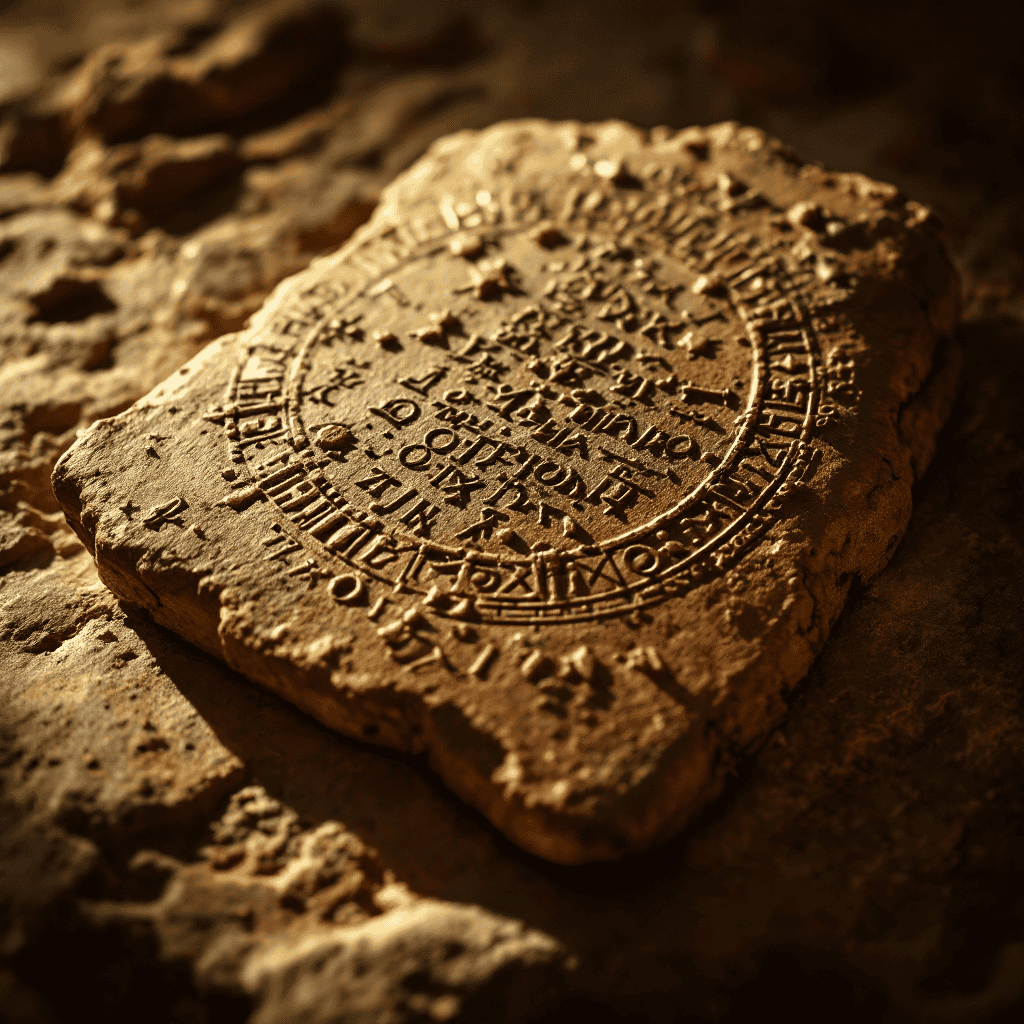
Zodiac origins history begins not in a single culture but across multiple ancient civilizations that observed the sky and recognized patterns in the movement of celestial bodies. The word zodiac itself comes from the Greek term zodiakos kyklos, meaning circle of animals, referring to the twelve constellations that mark the sun’s yearly path across the sky. These twelve divisions were not arbitrary entertainment but sophisticated systems of timekeeping, agricultural planning, and psychological mapping that influenced religion, architecture, and governance for thousands of years.
The earliest known zodiac system emerged in ancient Mesopotamia, specifically among the Babylonians around 1800 to 1000 BCE. These astronomer-priests tracked the movements of the sun, moon, and planets with remarkable precision, dividing the sky into twelve equal segments of thirty degrees each. Each segment corresponded to a constellation visible during a specific time of year. The Babylonians named these divisions after animals and mythological figures, creating a celestial calendar that governed agricultural cycles, religious festivals, and royal decrees. Their system was not fortune-telling but environmental mapping, a way to synchronize human activity with cosmic rhythm.
Mesopotamian Foundations of the Zodiac
The Babylonians did not invent astrology overnight. They inherited astronomical knowledge from the Sumerians, who recorded celestial events on clay tablets as early as 3000 BCE. These records show that ancient Mesopotamians viewed the heavens as a divine script, where gods communicated through planetary motion and stellar alignment. By the time the Babylonian Empire consolidated power, their priests had refined this knowledge into a formal system called MUL.APIN, a catalog of stars and constellations that included the earliest references to the twelve zodiacal constellations recognizable today.
The MUL.APIN tablets, dating to around 1000 BCE, listed eighteen constellations along the ecliptic, the apparent path the sun travels throughout the year. Over time, Babylonian astronomers refined this to twelve primary divisions, each assigned symbolic meanings tied to seasonal changes, agricultural tasks, and mythological narratives. Aries marked the spring equinox, a time of new growth. Taurus represented strength and fertility. Cancer aligned with the summer solstice. This was not mysticism divorced from observation but a practical framework for understanding time itself.
Zodiac origins history from this period reveals that the system was deeply mathematical. Babylonian astronomers used base-sixty mathematics, the same system that gives us sixty seconds in a minute and 360 degrees in a circle. They divided the ecliptic into twelve sections of thirty degrees each, creating a geometric framework that allowed precise calculation of planetary positions. This mathematical sophistication suggests that the zodiac was an advanced tool for prediction, not in the fortune-telling sense, but in the sense of forecasting seasonal weather, optimal planting times, and ceremonial dates tied to celestial events.
Egyptian Contributions and the Decans
While Mesopotamia provided the structural foundation, ancient Egypt contributed its own celestial mapping system that influenced zodiac origins history. The Egyptians divided the night sky into thirty-six decans, ten-degree segments of the ecliptic, each associated with a specific star or constellation. These decans were used to track time throughout the night and across the year, forming the basis of the Egyptian calendar. The famous Dendera Zodiac, a ceiling carving from the Temple of Hathor dating to around 50 BCE, displays a circular representation of the zodiac that blends Egyptian decans with the twelve Babylonian signs, showing clear cultural exchange between these civilizations.
Egyptian priests used these celestial maps for temple orientation and ritual timing. The rising of Sirius, the brightest star in the sky, signaled the annual flooding of the Nile, the event that sustained Egyptian agriculture. This connection between sky and survival reinforced the belief that celestial patterns carried divine intelligence. The zodiac was not separate from religion. It was religion made visible, a cosmic language through which the gods revealed their will. Later mystery schools in Egypt would teach that the soul’s journey mirrored the zodiac’s cycle, with each sign representing a stage of spiritual development, a concept explored more fully in frameworks connecting cosmic patterns with consciousness.
Greek Refinement and Ptolemaic Astrology
The zodiac system we recognize today owes much to Greek astronomers who inherited Babylonian knowledge following the conquests of Alexander the Great in the fourth century BCE. Greek scholars translated Babylonian astronomical texts, adapted the twelve-sign zodiac, and integrated it with their own philosophical traditions. Hipparchus, a Greek astronomer working around 150 BCE, made one of the most significant discoveries in zodiac origins history when he identified the precession of the equinoxes, a slow wobble in Earth’s rotational axis that causes the position of the spring equinox to shift backward through the zodiac over a cycle of approximately 26,000 years.
This discovery revealed that the zodiac was not fixed but dynamic, moving through what later mystics called the Great Year or Platonic Year. Each astrological age lasts roughly 2,100 years, and the shift from one age to another corresponds with major cultural and spiritual transformations. This concept would later influence Christian symbolism, Jewish mysticism, and esoteric traditions that viewed history as unfolding in cosmic cycles rather than linear progression. Ptolemy, a Greek-Egyptian astronomer and astrologer working in Alexandria around 150 CE, compiled this knowledge into the Tetrabiblos, a comprehensive text on astrology that became the standard reference for over a thousand years. His work formalized the zodiac’s twelve signs, assigned planetary rulerships, and established the symbolic correspondences that still define modern astrological practice.
The Greek contribution was not just technical but philosophical. Plato taught that the cosmos was a living, intelligent being, and the zodiac reflected the mind of the divine. Aristotle classified the heavens as the realm of unchanging perfection, distinct from the chaotic sublunary world below. Stoic philosophers believed that celestial patterns influenced human temperament through a concept called sympatheia, a cosmic resonance linking all parts of creation. These ideas transformed the zodiac from a calendar into a psychological framework, a map of archetypes describing human nature and experience.
Indian and Chinese Parallel Systems
Zodiac origins history is not confined to the Mediterranean and Near East. India developed its own astrological system called Jyotisha, or Vedic astrology, which shares structural similarities with the Babylonian zodiac but evolved independently within Hindu cosmology. The earliest Vedic texts, dating to around 1500 BCE, reference celestial observations, and by the first millennium BCE, Indian astronomers had formalized a twelve-sign zodiac called the Rashi system. The twelve signs in Vedic astrology correspond closely to the Western zodiac, though Vedic astrology uses a sidereal zodiac, which accounts for precession and aligns signs with the actual positions of constellations rather than fixed seasonal points.
In China, a different twelve-fold system emerged around the same period. The Chinese zodiac is based on a twelve-year cycle rather than twelve monthly divisions, with each year assigned an animal symbol. The origins of this system trace back to the Han Dynasty, around 206 BCE, though earlier references suggest the framework may be older. While structurally distinct from the Western zodiac, the Chinese system reflects the same impulse: to map time through symbolic archetypes, to align human activity with cosmic rhythm, and to understand personality through celestial timing. The cross-cultural consistency of twelve-fold systems suggests that ancient observers around the world detected similar patterns in the sky and in human nature, pointing toward a shared sensitivity to environmental and cosmic forces.
The Zodiac as Sacred Architecture
Understanding zodiac origins history requires recognizing that the zodiac was never just an abstract concept. It was built into physical space. Ancient civilizations aligned temples, pyramids, and entire cities with zodiacal geometry. The Great Pyramid of Giza aligns with the cardinal directions and specific star positions. Stonehenge marks solstices and equinoxes. Gobekli Tepe in Turkey, dating to around 10,000 BCE, contains carvings that some researchers interpret as early astronomical or zodiacal symbols. These structures were not monuments to superstition but precision instruments, observatories and ritual spaces designed to harmonize human consciousness with celestial order.
The recurring appearance of twelve in sacred architecture reinforces this connection. Solomon’s Temple featured twelve stones. Medieval cathedrals displayed zodiac wheels in stained glass, with Christ at the center and the twelve signs radiating outward like apostles. The zodiac was embedded in the very foundations of religious and political power, a cosmic blueprint governing both inner development and outer order. This same pattern appears in the human body, where ancient physicians and mystics observed twelve cranial nerves, twelve thoracic vertebrae, and other twelve-fold anatomical structures, suggesting that the zodiac was not imposed on nature but read from it. The mechanism behind these correspondences, including the specific protocols linking celestial timing with biological rhythms, remains one of the most closely guarded insights within the tradition.
From Babylon to the Modern World
The journey of zodiac origins history from ancient Mesopotamia to contemporary astrology spans over three millennia. After Ptolemy, the zodiac spread throughout the Roman Empire, influencing early Christian mysticism, Islamic astronomy, and medieval European scholarship. During the Islamic Golden Age, scholars in Baghdad, Cairo, and Cordoba preserved Greek and Babylonian texts, refining astronomical tables and developing new techniques for calculating planetary positions. When these texts returned to Europe during the Renaissance, they sparked renewed interest in astrology as both science and art.
By the seventeenth century, astrology and astronomy began to diverge. The scientific revolution emphasized empirical measurement and mechanical causation, relegating astrology to the realm of superstition. Yet the zodiac never disappeared. It persisted in folk traditions, mystical orders, and underground currents of esoteric knowledge. In the twentieth century, psychological astrology emerged through the work of Carl Jung, who viewed zodiacal archetypes as expressions of the collective unconscious. Modern researchers have explored correlations between birth timing and personality traits, findings that echo what ancient astrologers claimed thousands of years ago. This resurgence reflects a broader cultural shift toward recognizing patterns that peer-reviewed astrology frameworks continue to document and refine.
Why Twelve Signs, Not Ten or Fifteen?
One of the most compelling questions in zodiac origins history is why twelve became the dominant number. The answer lies in astronomical observation and mathematical convenience. The moon completes roughly twelve cycles in one solar year, making twelve a natural division for tracking time. Twelve is also highly divisible, breaking cleanly into halves, thirds, and quarters, which made it ideal for creating calendars and ritual schedules. But the number twelve appears so frequently across cultures, in tribes, apostles, months, musical tones, and constellations, that some traditions have viewed it as a fundamental code embedded in creation itself.
Ancient mystics taught that twelve represents cosmic completeness, the full range of archetypal experience through which consciousness evolves. Each zodiac sign corresponds to a distinct mode of being: Aries initiates, Taurus stabilizes, Gemini communicates, Cancer nurtures, Leo expresses, Virgo refines, Libra balances, Scorpio transforms, Sagittarius expands, Capricorn structures, Aquarius innovates, and Pisces dissolves. Together, these twelve form a complete cycle of growth, from birth through maturity to dissolution and renewal. The zodiac is not a random collection of symbols but a systematic map of human development, both individual and collective. The exact timing windows and developmental correspondences within this cycle, including lunar phase alignments and optimal practice windows, remain part of the advanced teachings.
Zodiac Origins and the Simulation Framework
If reality operates as a structured system, as simulation theorists and quantum physicists increasingly suggest, then the zodiac can be understood as part of that system’s operating code. With twelve signs, twelve houses, and multiple planetary variables, the astrological framework generates trillions of possible configurations, each representing a unique energetic blueprint. This combinatorial complexity mirrors genetic diversity, suggesting that the zodiac functions as a kind of cosmic DNA, encoding the initial parameters for consciousness entering physical form. Every birth moment captures a specific gravitational, magnetic, and electromagnetic field configuration, imprinting the developing nervous system with tendencies that later manifest as personality traits, emotional patterns, and life themes.
Modern research in magnetobiology and developmental neuroscience supports this view. Studies show that variations in Earth’s magnetic field influence brainwave patterns, hormone cycles, and even mood regulation. The vestibular system, the body’s gravity sensor, develops in utero and responds to subtle shifts in gravitational input, shaping spatial awareness and balance. If planetary alignments modulate Earth’s local field conditions, even slightly, those fluctuations could leave measurable imprints on the developing brain. The ancients may not have understood the mechanism in modern terms, but they recognized the pattern: the conditions present at birth shape the person who emerges. That insight was encoded into the zodiac, not as superstition but as environmental mapping, a sophisticated system for tracking how cosmic timing intersects with biological development. The full synthesis of these mechanisms, including the biological pathways through which celestial timing influences neural development, forms the core of the advanced work.
The Zodiac as Psychological Profiling
Modern personality profiling systems like Myers-Briggs, DISC, and the Big Five operate on the same principle as the zodiac: human temperament clusters into recognizable patterns. The difference is methodology. MBTI uses questionnaires. The Big Five uses statistical analysis. The zodiac uses celestial timing. But all three assume that personality is structured, not random, and that identifying those structures improves self-awareness and interpersonal understanding. The zodiac predates these modern systems by millennia, making it arguably the oldest psychological framework in continuous use.
Each zodiac sign describes a distinct behavioral archetype. Fire signs, Aries, Leo, Sagittarius, tend toward action, enthusiasm, and risk-taking. Earth signs, Taurus, Virgo, Capricorn, value stability, practicality, and material security. Air signs, Gemini, Libra, Aquarius, prioritize communication, ideas, and social connection. Water signs, Cancer, Scorpio, Pisces, emphasize emotion, intuition, and relational depth. These categories are not rigid boxes but starting tendencies, baseline parameters that interact with environment, choice, and free will to produce the full complexity of human personality. The specific techniques for working with these tendencies, including ego dissolution practices and sovereignty protocols, are reserved for those ready to integrate the knowledge.
Closing Reflection
Zodiac origins history is not the story of superstition surviving despite evidence but the story of pattern recognition persisting because it works. From Babylonian priest-astronomers to Greek philosophers, from Egyptian temple builders to medieval mystics, the zodiac has endured because it describes something real: the recurring archetypes of human experience, the cyclical nature of time, and the subtle resonance between celestial motion and earthly life. Modern science is only now beginning to measure what the ancients observed intuitively, that cosmic forces influence biology, that timing at birth leaves lasting imprints, and that personality patterns are not random but structured.
The zodiac was never fortune-telling. It was environmental intelligence encoded in symbol. It mapped the conditions present at the moment of entry into physical form, offering a blueprint for understanding tendencies, strengths, and growth edges. That knowledge was hidden in plain sight, ridiculed by institutions that benefited from keeping populations disconnected from their own inner architecture. Reclaiming the zodiac is not about believing in magic. It is about recognizing the mathematics of resonance, the geometry of time, and the coherence between self and cosmos. The same elites who mock astrology publicly still consult it privately. The same churches that condemned it as heresy embedded it into cathedral floors and stained glass windows. The pattern was never lost. It was only obscured. Now it returns, not as superstition but as remembrance, the oldest science reclaimed by those willing to see.