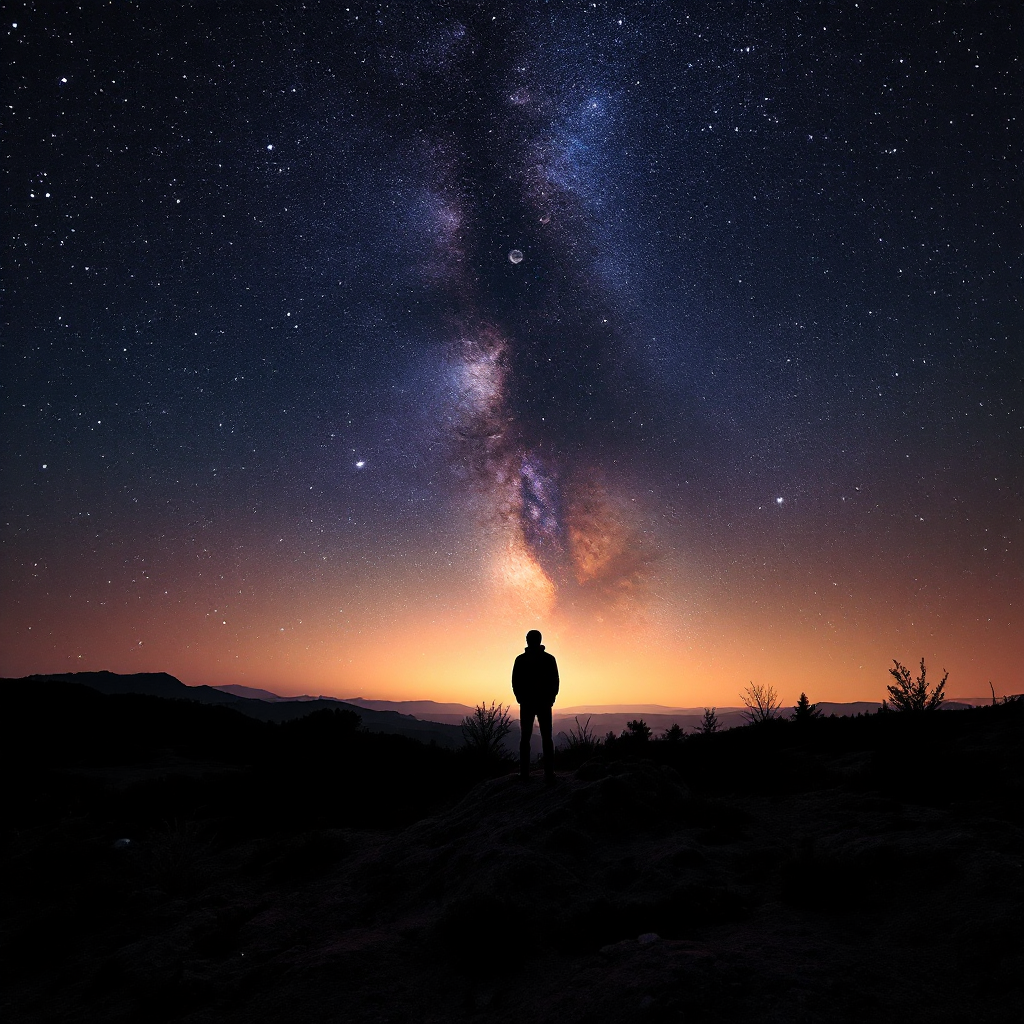
Circadian rhythm and astrology converge at a point most modern medicine overlooks: your body runs on a celestial clock. The 24-hour cycle of sleep, hormone release, and cellular repair that governs your biology is not generated in isolation. It responds to the same cosmic forces ancient astrologers tracked for thousands of years. Light and darkness, lunar phases, and planetary motion do not merely correlate with your internal rhythms. They help set them.
Modern science calls this chronobiology, the study of biological time. Ancient traditions called it sacred timing. Both describe the same phenomenon: living systems synchronize with celestial patterns. The pineal gland responds to solar exposure. Melatonin production follows the setting sun. Cortisol rises with dawn. These are not metaphors. They are measurable responses to astronomical events that repeat in predictable cycles.
What makes circadian rhythm and astrology particularly compelling is not their symbolic overlap but their structural similarity. Astrology maps personality and predisposition through birth timing. Chronobiology maps health and performance through the same variable. Both systems argue that when you enter the world, and under what conditions, shapes how your biology operates for the rest of your life.
The Biological Clock Is a Solar Instrument
Your circadian rhythm is controlled by a cluster of neurons in the hypothalamus called the suprachiasmatic nucleus. This tiny region, roughly the size of a grain of rice, acts as your master clock. It receives direct input from the eyes through a dedicated neural pathway that tracks ambient light levels. When sunlight hits your retina, the signal travels to this cluster and tells your body what time it is. Not the time on your phone. The time according to the sun.
This is not a backup system. It is the primary mechanism. Before clocks, calendars, or artificial lighting, humans lived by this rhythm. The body still does. Jet lag, shift work disorder, and seasonal depression all stem from the same root cause: circadian misalignment. When your internal clock no longer matches the external celestial cycle, your biology begins to fail. Hormones release at the wrong time. Sleep architecture collapses. Immune function weakens.
Astrology operates on the same premise. It argues that celestial timing at birth imprints a baseline pattern into your system. That pattern influences temperament, energy cycles, and even vulnerability to certain conditions. Modern sleep research supports this indirectly. Studies show that people born in different seasons exhibit different chronotypes, whether they naturally wake early or stay up late. Summer-born individuals trend toward evening preference. Winter-born individuals skew morning. The season of your birth, determined by Earth’s position relative to the sun, leaves a measurable mark on how your circadian rhythm operates decades later.
Lunar Cycles and Biological Rhythm
The moon’s influence on circadian rhythm and astrology has been documented across cultures for millennia. Ancient calendars were lunar. Religious observances followed moon phases. Agricultural cycles synchronized with the new and full moons. Modern researchers dismissed this as superstition until data began accumulating that could not be ignored.
A 2013 study published in Current Biology found that sleep duration and quality fluctuate with lunar phases. Participants took longer to fall asleep and slept less deeply during the full moon, even in controlled laboratory settings with no view of the sky. Melatonin levels dropped. Sleep onset delayed by an average of five minutes. Total sleep time decreased by 20 minutes. The researchers had no explanation rooted in light exposure, as subjects were isolated from moonlight. The correlation persisted anyway.
Further research has shown that the menstrual cycle, which averages 29.5 days, mirrors the lunar month with striking precision. Ovulation rates increase during the full moon. Fertility peaks align with lunar brightness. These are not cultural artifacts. They are biological responses to a celestial rhythm that predates human civilization. The same gravitational and electromagnetic forces that create ocean tides also appear to influence biological rhythms in species that evolved under their influence.
Astrology encoded this knowledge symbolically. The moon governs emotion, intuition, and the subconscious in astrological systems across every culture. That is not metaphor. It is observed pattern translated into archetype. Those who explore peer-reviewed astrology recognize that ancient observers were tracking measurable phenomena long before the scientific method formalized the process.
Seasonal Birth Effects on Circadian Biology
If circadian rhythm and astrology share a common root, it should appear most clearly in seasonal birth data. And it does. Research from multiple institutions has confirmed that the season in which you are born affects not only personality tendencies but also circadian gene expression, sleep patterns, and mood regulation.
A 2015 study from Vanderbilt University found that mice born in winter exhibited different dopamine levels and activity patterns compared to those born in summer. The differences persisted into adulthood, even when all environmental variables were controlled. The length of daylight exposure during early development altered how their circadian clocks functioned permanently. Human studies have found parallel effects. Winter-born individuals show higher rates of seasonal affective disorder. Summer-born individuals display altered melatonin sensitivity.
These findings align with astrological claims that birth timing shapes baseline temperament. The symbolic language differs, but the mechanism is the same. Astrology calls it a natal chart. Chronobiology calls it developmental imprinting. Both describe a system in which early environmental conditions, specifically light exposure and seasonal cycles, leave lasting marks on biology and behavior.
The connection extends beyond mood. Circadian misalignment has been linked to increased risk of metabolic syndrome, cardiovascular disease, and certain cancers. Shift workers, whose schedules force them out of sync with solar cycles, exhibit higher rates of all three. The body is not designed to operate independently of celestial rhythm. When it tries, the system breaks down. What astrology described as cosmic harmony, modern medicine now calls circadian health. The language changed. The truth did not.
The Pineal Gland and the Celestial Gate
At the center of circadian rhythm and astrology sits a single gland: the pineal. This pea-sized organ, located deep in the center of the brain, produces melatonin in response to darkness. It is your body’s timekeeper, translating light input into hormonal output. Without it, your circadian rhythm collapses. Sleep becomes erratic. Seasonal awareness disappears. The internal clock stops ticking.
Ancient traditions called the pineal the third eye. Modern anatomy calls it the primary circadian pacemaker. Both descriptions point to the same function: the pineal acts as a biological antenna, receiving environmental signals and translating them into internal rhythm. It responds to solar cycles, lunar phases, and even geomagnetic fluctuations. Research has confirmed that the pineal contains magnetite crystals, the same iron-based structures found in migratory birds that detect Earth’s magnetic field.
This makes the pineal uniquely sensitive to cosmic timing. It does not merely respond to light. It responds to the full spectrum of environmental input generated by celestial motion. Astrology maps this sensitivity symbolically. The natal chart reflects the gravitational and electromagnetic conditions present at birth. The pineal, developing during pregnancy and continuing to mature after birth, encodes those conditions as a baseline operating frequency.
The optimal conditions for pineal activation occur during specific windows tied to lunar and solar cycles. These windows correspond to timing protocols long preserved in sacred traditions, and the full mechanism for aligning circadian rhythm with celestial cycles involves REDACTED, READ CHAPTER 8. The relationship between melatonin production and lunar phases is not coincidental. It is the biological expression of a cosmic rhythm that astrology has tracked for thousands of years.
Chronotypes and Astrological Archetypes
Chronobiology recognizes that not everyone operates on the same internal clock. Some people are natural early risers. Others function best late at night. These patterns, called chronotypes, appear to be partially genetic and partially environmental. They shape when you feel alert, when you perform best, and even when your body is most vulnerable to disease.
The connection between chronotypes and astrological archetypes is more than symbolic. Both systems describe recurring patterns in how individuals interact with time. Fire signs in astrology, Aries, Leo, Sagittarius, often correspond to morning chronotypes: high energy at dawn, rapid decline after sunset. Water signs, Cancer, Scorpio, Pisces, skew toward evening preference, with peak alertness arriving later in the day. Earth and air signs distribute across the spectrum, but the pattern holds consistently enough to suggest shared underlying mechanisms.
Astrology does not cause chronotype. Neither does chronotype cause astrological placement. Both reflect the same variable: the timing and conditions of your entry into the world. The length of daylight you experienced in utero, the season of birth, the latitude of your birthplace, all of these factors influence circadian gene expression. Astrology maps those factors symbolically. Chronobiology measures them empirically. The map and the territory describe the same ground.
The practical implication is that understanding your chronotype can improve health, performance, and alignment. Operating against your natural rhythm creates the same biological stress as operating against astrological tendency. You can override both through willpower, but the cost is measurable. Sleep quality declines. Cortisol remains elevated. Inflammation increases. The body keeps score. Circadian rhythm and astrology both argue the same point: alignment with your natural timing is not optional. It is foundational.
Planetary Cycles and Multi-Day Rhythms
Circadian rhythm is the most studied biological cycle, but it is not the only one. The body also operates on ultradian rhythms, cycles shorter than 24 hours, and infradian rhythms, cycles longer than a day. Some of these longer cycles align with planetary motion in ways that modern science is only beginning to measure.
The circaseptan rhythm, a seven-day biological cycle, appears in immune response, blood pressure, and heart rate variability. This rhythm is independent of cultural weekly structures. It persists in populations with no concept of a seven-day week. The origin is unclear, but the pattern is consistent. Some researchers propose that it reflects a biological sensitivity to lunar quarters, each roughly seven days apart. Others suggest it corresponds to geomagnetic variations tied to solar wind cycles.
Astrology has tracked these longer cycles for millennia. The Saturn return, occurring roughly every 29 years, corresponds to Saturn’s orbital period. The Jupiter cycle, repeating every 12 years, mirrors Jupiter’s solar orbit. These are not symbolic metaphors. They are astronomical facts encoded into astrological systems as timing markers. Whether those markers correspond to biological shifts remains an open question, but emerging research on long-term biological rhythms suggests the question is worth asking.
The mechanism by which planetary cycles might influence biology remains speculative. Gravitational effects at the planetary scale are negligible at the human level. Electromagnetic resonance offers a more plausible pathway. The Earth’s magnetic field fluctuates in response to solar activity and, to a lesser extent, planetary alignments. Those fluctuations are measurable and have been shown to influence biological systems, including circadian rhythm. If the pineal gland and other magnetite-rich tissues respond to these shifts, then planetary timing could serve as a proxy for geomagnetic conditions, exactly as ancient cosmological frameworks suggested.
Light Exposure and Astrological Timing
The single most powerful input to circadian rhythm is light. Not just any light, but the specific wavelengths and timing of solar exposure. Blue light in the morning advances your clock, making you wake earlier. Red light in the evening delays it, shifting you toward night preference. The body uses light as a synchronization signal, constantly adjusting its internal rhythm to match external conditions.
Astrology has always emphasized the importance of solar and lunar positioning. The sun sign, the most recognized element of a natal chart, reflects the position of the sun at birth. The moon sign reflects lunar placement. Both are timing markers, snapshots of celestial geometry at the moment of entry. What modern chronobiology has added is the mechanism: light exposure during critical developmental windows imprints circadian gene expression.
This creates a feedback loop. The celestial conditions at birth shape your baseline circadian rhythm. That rhythm influences how you respond to subsequent light exposure throughout life. A person born under long summer days may develop a circadian system that requires more light to stay synchronized. A person born during short winter days may need less. These tendencies persist because the circadian system, like the nervous system, is shaped by early environmental input and remains partially locked into that configuration.
The protocol for resetting circadian rhythm using targeted light exposure during specific lunar and solar windows is detailed in REDACTED, READ CHAPTER 8. The timing matters as much as the intensity. Exposure at the wrong phase can worsen misalignment rather than correct it. This is why biological timing linked to cerebrospinal fluid production must synchronize with external celestial rhythm for optimal function.
Geomagnetic Sensitivity and Human Rhythm
One of the most overlooked connections between circadian rhythm and astrology is geomagnetic sensitivity. Earth’s magnetic field fluctuates daily, influenced by solar wind, cosmic radiation, and to a lesser degree, planetary alignment. These fluctuations are small but measurable, and mounting evidence suggests that humans detect them.
A 2019 study from Caltech confirmed that human brainwaves respond to rotations in Earth-strength magnetic fields. Subjects seated in a controlled environment showed measurable EEG changes when exposed to magnetic field shifts equivalent to those caused by natural geomagnetic variation. The researchers concluded that humans possess a subconscious magnetoreception capability, the same sense that migratory birds and sea turtles use for navigation.
This capability has direct implications for circadian rhythm. If the brain detects geomagnetic shifts, and those shifts correlate with celestial cycles, then the body may be using magnetic input as a secondary timing signal alongside light. The pineal gland, which contains magnetite crystals, is the most likely candidate for this detection. Astrology has always treated planetary positions as meaningful timing markers. Geomagnetic research suggests those markers correspond to real, measurable environmental conditions that the body responds to biologically.
The specific frequencies and timing windows during which geomagnetic sensitivity peaks involve REDACTED, READ CHAPTER 8. Practitioners using the full protocol report improved sleep onset, deeper REM cycles, and better alignment between subjective alertness and objective performance. The mechanism is not mysterious. It is environmental synchronization, the same process astrology has described symbolically for thousands of years.
Fasting, Circadian Rhythm, and Lunar Timing
One of the most powerful interventions for resetting circadian rhythm is timed fasting. Restricting food intake to specific windows forces the body to realign its metabolic clock with the feeding schedule. This is why intermittent fasting works. It is not about calorie restriction. It is about re-synchronizing internal timing with external rhythm.
What most fasting protocols ignore is that the effectiveness of the fast depends on when it occurs relative to celestial cycles. Fasting during the new moon produces different metabolic and hormonal effects than fasting during the full moon. The body’s sensitivity to insulin, cortisol, and melatonin all fluctuate with lunar phase. A fast timed to align with these natural peaks amplifies the circadian reset.
Astrology has always emphasized the importance of timing rituals and practices with celestial cycles. Fasting, meditation, and even physical training were traditionally aligned with moon phases and solar transitions. Modern chronobiology is rediscovering the same principle through metabolic research. The when matters as much as the what. The specific fasting windows that align with both circadian rhythm and astrological timing are outlined in REDACTED, READ CHAPTER 8. The protocol includes not just the duration of the fast but the preparation phase, the breaking phase, and the lunar alignment required for maximum effect. Those who understand how food systems disrupt natural timing recognize that fasting is as much about removing interference as it is about adding discipline.
Sleep Architecture and Astrological Houses
Sleep does not occur in a single block. It cycles through stages: light sleep, deep sleep, REM sleep, each repeating roughly every 90 minutes throughout the night. This ultradian rhythm within the circadian cycle creates a layered structure of rest and restoration. Disruption at any stage degrades the entire night.
Astrology uses a similar structure called houses. The natal chart is divided into 12 houses, each representing a different area of life. The houses cycle through the chart just as sleep cycles through its stages. Both systems describe how time divides into phases, each with its own function and priority. The first house corresponds to self and identity, much like the first sleep cycle establishes the foundation for the night. The 12th house represents the subconscious and dissolution, mirroring REM sleep, where the boundary between self and dream dissolves.
The parallel is not coincidental. Both systems map how consciousness moves through structured phases over time. Sleep architecture is the biological expression of the same rhythm astrology tracks symbolically. The timing and duration of each phase matter. A disrupted sleep cycle produces the same systemic dysfunction as a misaligned astrological transit. The body and the chart both operate on the principle that time is not uniform. It is structured, and each phase serves a specific purpose.
The method for aligning your sleep cycles with your natal house structure involves REDACTED, READ CHAPTER 8. The synchronization is subtle but measurable. Practitioners report not only better sleep quality but improved intuition, decision-making, and emotional regulation. The alignment is not mystical. It is environmental coherence.
Cortisol, Melatonin, and the Solar Day
Two hormones govern circadian rhythm more than any others: cortisol and melatonin. Cortisol rises in the morning, peaking shortly after waking. It drives alertness, metabolism, and immune activation. Melatonin rises in the evening, signaling the body to prepare for sleep. Together they form the hormonal axis of the circadian clock.
Both hormones are directly controlled by light exposure. Morning sunlight triggers cortisol release. Evening darkness triggers melatonin production. The system is simple and ancient. It evolved to synchronize human biology with the solar day. When that synchronization breaks, the consequences are immediate. Cortisol remains elevated at night, preventing sleep. Melatonin fails to rise in the evening, leaving you wired when you should be winding down.
Astrology has always emphasized the sun as the central organizing force. The sun sign dominates the natal chart for the same reason the sun dominates circadian rhythm. It is the primary input. Everything else modulates around it. The timing of sunrise and sunset at your birth location shapes your baseline circadian rhythm. That rhythm, encoded into your biology during development, remains your default setting unless actively overridden.
The exact cortisol and melatonin timing windows that correspond to optimal circadian and astrological alignment involve REDACTED, READ CHAPTER 8. The protocol is not about supplementing hormones. It is about restoring the natural rhythm that artificial light and modern schedules have disrupted. Supplementation bypasses the problem. Alignment solves it.
Jet Lag, Transits, and Temporal Dislocation
Jet lag is circadian misalignment made acute. Your internal clock remains locked to your origin time zone while your environment shifts by hours. The result is fatigue, cognitive impairment, digestive dysfunction, and mood disturbance. It takes roughly one day per time zone crossed for the body to fully resynchronize. The delay is not psychological. It is biological. Your circadian rhythm cannot instantly adjust to a new solar schedule.
Astrology describes a parallel phenomenon called transits. When planets move through your natal chart, they create temporal friction, moments when external celestial conditions clash with your internal baseline. The experience mirrors jet lag. You feel out of sync, as though time itself has shifted beneath you. Energy drops. Decision-making falters. Emotional regulation weakens. The transit passes, and equilibrium returns, but the disruption is real.
Both jet lag and transits reflect the same principle: your biology and your consciousness are synchronized to a baseline rhythm. When that rhythm is disrupted, whether by travel or celestial motion, the system struggles to adapt. The recovery protocol is the same in both cases: re-establish alignment with the dominant external signal. For jet lag, that signal is local sunlight. For transits, it is the current celestial configuration. The method for accelerating circadian re-synchronization after travel or during difficult transits involves REDACTED, READ CHAPTER 8.
The Circadian Code Is the Astrological Code
Circadian rhythm and astrology are not separate systems that happen to overlap. They are two descriptions of the same underlying architecture. One maps it biologically. The other maps it symbolically. Both recognize that living systems synchronize with celestial cycles, that timing at birth shapes long-term function, and that alignment with natural rhythm is foundational to health and coherence.
Modern science has confirmed what ancient astrologers observed: the heavens set the clock. The sun governs your waking hours. The moon modulates your sleep and emotional cycles. Seasonal birth timing influences chronotype, mood regulation, and metabolic function. Geomagnetic sensitivity allows your brain to detect celestial conditions without conscious awareness. Every biological rhythm, from the 24-hour circadian cycle to the seven-day immune rhythm to the 29-day hormonal cycle, reflects a celestial pattern that astrology encoded thousands of years ago.
The full synthesis of circadian biology and astrological timing is presented in Master Thyself by Alex Wolfram, where the mechanisms behind both systems are revealed not as separate disciplines but as complementary maps of the same cosmic code. The protocols for aligning your circadian rhythm with your natal chart, for using lunar timing to reset metabolic function, and for synchronizing sleep architecture with celestial transits, are all detailed with precision. The book does not ask you to choose between science and symbolism. It shows you how both point to the same truth: you are not separate from the cosmos. You are synchronized with it, and reclaiming that alignment is the foundation of mastery.
The stars do not control you. They mark the rhythm you were born into. Understanding that rhythm, and learning to live in harmony with it, is not submission. It is sovereignty.