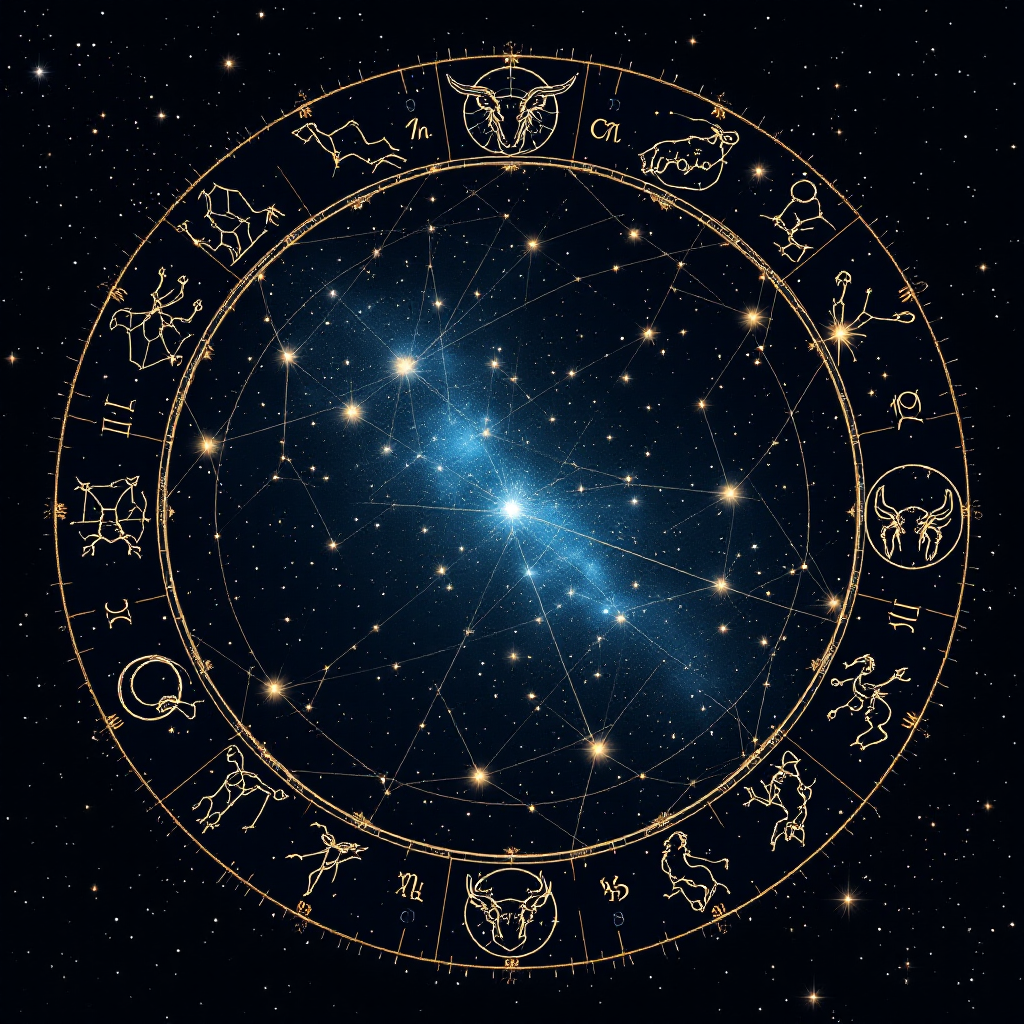
Did the zodiac signs change? This question surfaces every few years when someone discovers that Earth wobbles on its axis, shifting our view of the constellations over thousands of years. The short answer is no, your zodiac sign did not change. The longer answer reveals why astrology and astronomy split paths centuries ago, and why understanding that split matters more than you might think.
The confusion began when astronomers announced that due to a phenomenon called axial precession, the sky has shifted since ancient Babylonians mapped the zodiac 3,000 years ago. Earth wobbles like a spinning top, completing one full cycle roughly every 26,000 years. This means the constellation behind the sun on your birthday is no longer the same one the ancients saw. But here is what most headlines miss: Western astrology never tracked the constellations themselves. It tracked something else entirely.
The Two Zodiacs: Tropical vs Sidereal
Western astrology uses what is called the tropical zodiac. This system anchors the twelve signs to the seasons, not the stars. The first day of Aries always begins at the spring equinox, the moment when day and night balance before light begins to dominate. Libra begins at the autumn equinox. Cancer starts at the summer solstice. Capricorn marks the winter solstice. These are fixed points in Earth’s annual journey around the sun, and they do not shift no matter what constellation appears behind them.
The sidereal zodiac, used primarily in Vedic astrology, does track the constellations. Vedic astrologers account for precession and adjust their charts accordingly. So when someone asks did the zodiac signs change, the real question is which zodiac are you talking about? If you were born in the West and read your horoscope in a newspaper, your sign is tropical. It has not moved. The equinoxes and solstices remain exactly where they always were.
This is not a flaw in the system. It is the system. Western astrology was built on the rhythm of seasons, on light and dark, growth and harvest, warmth and cold. The twelve signs map onto twelve phases of that cycle. Aries is the burst of spring. Taurus is the settling into growth. Gemini is the quickening before summer. The wheel turns through the year, and the signs turn with it, regardless of which constellation happens to be overhead.
Precession and the Great Year
Precession is real. Ancient astronomers knew about it. Greek astronomer Hipparchus documented it in the second century BC. The Babylonians likely understood it even earlier. As Earth wobbles, the backdrop of stars behind the sun at any given time of year shifts backward through the zodiac at a rate of about one degree every 72 years. Over the course of roughly 2,160 years, the spring equinox moves through one entire zodiacal constellation. The full cycle, sometimes called the Great Year, takes about 26,000 years.
This is where the concept of astrological ages comes from. We are transitioning from the Age of Pisces into the Age of Aquarius, a shift marked not by individual birth charts but by the slow drift of the spring equinox backward through the constellations. These ages represent collective epochs, not personal identity. Your birth chart reflects the moment you entered the world, and that moment is calculated using the tropical system anchored to Earth’s seasons, not to the stars themselves.
The tropical zodiac does not ignore precession. It simply does not need to correct for it. The signs were never meant to match the constellations after the system was standardized. They were meant to match the solar cycle. When astrologers talk about the twelve signs, they are describing archetypal phases of a year, not star patterns in the sky. This distinction is what most viral articles miss entirely.
Why the Confusion Keeps Returning
Every few years, a science blog or news outlet publishes a story claiming astrology is debunked because the constellations have shifted. The story usually includes a graphic showing how much the sky has changed since ancient times, implying that everyone has been reading the wrong horoscope their entire lives. The story goes viral. People panic. Then astrologers patiently explain the difference between tropical and sidereal systems, and the cycle repeats.
Part of the problem is that astronomy and astrology share a common ancestor but serve different purposes now. Astronomy measures the physical positions of celestial objects. Astrology interprets symbolic patterns and timing. When the two disciplines split, astrology retained the seasonal framework while astronomy continued mapping the stars. Neither is wrong. They are simply measuring different things.
The deeper issue is that most people encounter astrology through oversimplified sun sign horoscopes. These generic predictions, based only on your sun sign, strip away the depth of a full birth chart. A real astrological reading includes your moon sign, your rising sign, and the positions of all the planets at the moment of your birth. It accounts for houses, aspects, and transits. The sun sign is just one piece. When you reduce astrology to twelve cookie cutter personalities, it becomes easy to dismiss. But that dismissal ignores thousands of years of observation, pattern mapping, and peer reviewed research into celestial timing that continues to this day.
What Actually Defines Your Sign
Your zodiac sign is determined by where the sun was in the tropical zodiac at the moment of your birth. If you were born on April 15, the sun was in Aries, the phase of the solar year that corresponds to early spring in the Northern Hemisphere. That has not changed. April 15 still falls in Aries. The constellation rising behind the sun that day may have shifted over millennia, but the tropical sign has not.
This is why your birth chart remains accurate even though the stars have moved. The chart is not a photograph of the sky. It is a map of energetic conditions at a specific moment in time, calculated using a framework that has remained consistent for over two thousand years. The tropical zodiac treats the spring equinox as zero degrees Aries every single year. That point is recalibrated annually, so the system self corrects.
The moon, planets, and rising sign in your chart are also calculated using the tropical system. Your rising sign, or ascendant, is the sign that was ascending on the eastern horizon at your exact time and place of birth. It changes roughly every two hours, which is why birth time matters. The moon moves through all twelve signs in about 28 days, spending roughly two and a half days in each. These placements reflect inner emotional patterns, outer expression, and timing windows for action. None of them are invalidated by precession.
Some traditions do use the sidereal zodiac and adjust for precession. Vedic astrology, also called Jyotish, calculates charts this way. If you have ever compared a Western chart to a Vedic chart, you may have noticed your signs differ by roughly 24 degrees, the amount the tropical and sidereal zodiacs have drifted apart. Both systems work within their own frameworks. The question is not which one is correct, but which framework you are using and whether it is internally consistent.
The Role of the Constellations
The twelve zodiac constellations are not evenly sized. Virgo spans a much larger section of sky than Cancer. Ophiuchus, the so called thirteenth constellation, does cross the ecliptic, the path the sun appears to follow across the sky. But the tropical zodiac divides the year into twelve equal 30 degree segments, not into unequal star patterns. The constellations were reference points for ancient astronomers. The signs became symbolic phases for astrologers.
This is why adding Ophiuchus as a thirteenth sign, a claim that resurfaces periodically, makes no sense within the tropical system. The twelve signs correspond to twelve months, twelve archetypal phases, and twelve divisions of the solar year. Thirteen does not fit that structure. The suggestion usually comes from astronomers who are describing constellations, not astrologers who are describing seasonal archetypes.
Understanding this distinction allows you to see astrology not as a failed astronomy but as a symbolic language. The signs are not literal chunks of sky. They are codes for recurring patterns in nature and human experience. Aries energy appears in every spring, regardless of what constellation the sun occupies. The ram represents initiation, boldness, and the first burst of life after winter. That archetype does not require a specific star cluster to remain valid. It requires the return of warmth and light.
How the Framework Actually Works
The tropical zodiac operates on a principle older than the stars themselves: as above, so below. The macrocosm mirrors the microcosm. The turning of the seasons mirrors the turning of a life. Birth, growth, maturity, decline, death, and rebirth cycle endlessly through nature, and the twelve signs map that cycle in symbolic form. This is not astronomy. It is pattern recognition applied to time.
Modern personality frameworks like Myers Briggs or the Enneagram do something similar. They divide human temperament into recurring types, not because every person fits neatly into a box, but because patterns emerge when you study behavior at scale. Astrology predates those frameworks by millennia. It organizes personality and timing into twelve archetypal categories, then layers those categories across planets, houses, and aspects to create a highly individualized map.
The mechanism behind why this works involves more than symbolism. Research into magnetobiology, gravitational imprints, and fetal development suggests that the conditions present at birth, including Earth’s magnetic field, lunar cycles, and solar activity, leave measurable effects on the developing nervous system. These influences do not override free will, but they do create predispositions. The birth chart captures those conditions in symbolic form. The full synthesis of how cosmic timing intersects with biology is detailed in Master Thyself by Alex Wolfram, where the gravitational and electromagnetic framework underlying astrological timing is explained in depth.
What NASA Actually Said
In 2016, NASA published an educational blog post explaining precession to kids. The post mentioned that the Babylonians chose twelve constellations to match their twelve month calendar, and that the sky has shifted since then. The internet interpreted this as NASA saying astrology was debunked. NASA later clarified that they study astronomy, not astrology, and were simply explaining a scientific phenomenon. They were not making a claim about whether astrology works or does not work.
The confusion illustrates how little most people know about how astrology actually functions. If astrology were purely based on constellation positions, then yes, precession would invalidate it. But Western astrology has not been constellation based for over two thousand years. It is season based. The fact that journalists and casual readers keep missing this point speaks to how thoroughly the symbolic framework has been misunderstood or misrepresented in popular culture.
Astronomy and astrology were once the same discipline. Ancient Babylonians, Egyptians, and Greeks studied the stars for both practical navigation and symbolic meaning. The split occurred gradually as empirical science focused on measurement and prediction of physical phenomena, while astrology retained its focus on meaning, pattern, and timing. Both are valid within their own domains. Conflating them leads to the kind of confusion that fuels viral headlines about zodiac signs changing.
Why Your Sign Still Matters
Your zodiac sign represents the archetypal energy you were born into, the starting conditions of your consciousness as it entered the simulation of physical reality. If you think of life as a structured system with parameters and variables, your birth chart is the configuration you arrived with. It does not dictate your destiny, but it does describe your baseline settings: how you process emotion, how you assert will, how you communicate, how you relate.
When someone tells you your sign changed, what they are really saying is that they do not understand the system. The tropical zodiac is not broken. It is functioning exactly as designed. The spring equinox remains the anchor point. The twelve signs remain mapped to the twelve phases of the solar year. Your birth chart remains an accurate snapshot of the moment you were born, calculated using a framework that has remained internally consistent across centuries.
Those who dismiss astrology often point to the fact that horoscopes are vague and applicable to anyone. That criticism is fair when aimed at mass market sun sign horoscopes, which are designed for entertainment, not insight. But a full natal chart reading, done by someone who understands houses, aspects, transits, and timing, delivers something far more specific. It maps the intersection of cosmic cycles with individual development. It reveals not fate but framework, not certainty but probability.
The same gravitational and magnetic forces that shape tides, migration patterns, and circadian rhythms also shape fetal development. Birth is the moment those forces imprint onto a developing nervous system. The chart does not control you. It describes the energetic conditions you were born into, the same way your genetics describe your biological starting point. Both are maps, not mandates. How you navigate those maps remains entirely up to you.
The Ancient Knowledge Still Holds
Civilizations across history left behind advanced knowledge in agriculture, architecture, mathematics, and medicine. Nearly every breakthrough they recorded has proven foundational to modern society. The same cultures also practiced astrology, not as superstition but as sacred science. They built temples aligned to celestial events. They timed planting and harvest by lunar cycles. They mapped personality and fate using the positions of planets at birth. If they were right about nearly everything else, why assume they were wrong only about this?
Modern science is beginning to catch up. Studies on birth month and mental health, magnetic field sensitivity in humans, and the effects of gravitational variation on cellular development all point toward the same conclusion: the conditions at birth matter. The ancients encoded that knowledge symbolically. We are now measuring it empirically. The language differs, but the territory remains the same.
Understanding how these forces interact with the developing brain, and how those patterns persist across a lifetime, requires a depth of synthesis that goes beyond introductory astrology. The mechanism involves gravitational imprinting, electromagnetic sensitivity, and neurological patterning during critical windows of development. The specifics of that process, including REDACTED, READ CHAPTER 8, are detailed in the full framework. The public explanation stops at correlation. The book delivers causation.
What remains clear is that the zodiac signs did not change in any way that affects your birth chart. The tropical system remains anchored to the seasons. Your sun sign, moon sign, and rising sign are all calculated using the same method astrologers have used for over two millennia. The only thing that changed is our collective understanding of precession, and that understanding does not invalidate the framework. It simply clarifies which zodiac you are using and why.
Distinguishing Knowledge from Entertainment
The real damage comes not from precession but from oversimplification. When astrology is reduced to twelve generic horoscopes in the back of a magazine, it loses its precision. When people read a two sentence blurb and decide it does not apply to them, they are rejecting a caricature, not the discipline itself. A real astrological chart contains hundreds of data points. It maps the exact degree of every planet, the angles between them, and the houses they occupy. It tracks transits, progressions, and returns. This is not fortune telling. It is environmental mapping.
The difference between pop astrology and serious astrology mirrors the difference between a personality quiz and a psychological assessment. One entertains. The other informs. Both use similar language, but the depth of analysis is incomparable. If you have only encountered astrology through memes and horoscopes, you have not encountered astrology. You have encountered marketing.
Reclaiming astrology as a tool for self knowledge requires understanding what it actually measures. It does not predict the future. It describes cycles, timing windows, and developmental phases. It reveals when certain energies peak and when others recede. It maps the architecture of personality in symbolic terms that, when translated into modern psychology, align remarkably well with established models of temperament and behavior. The twelve signs function like twelve lenses through which consciousness experiences reality. Each lens has strengths, blind spots, and lessons. None is better or worse. All are necessary.
That framework extends beyond the individual. Astrology also tracks collective cycles, the turning of ages, the rise and fall of cultural paradigms, and the energetic shifts that accompany them. Understanding those cycles allows you to navigate change with greater awareness. You stop reacting to shifts as random chaos and start recognizing them as phases within a larger pattern. The same knowledge that once guided empires, shaped ancient monuments, and timed sacred rituals remains accessible to anyone willing to look past the headlines and study the system as it was designed to function.
Your Birth Chart as Blueprint
Think of your natal chart as the avatar you chose when entering the game. It is the character build you woke up inside, complete with starting stats, strengths, weaknesses, and growth paths. You are not your chart any more than you are your body. You are the player. But understanding the character you are playing allows you to maximize its potential. Ignoring the chart is like ignoring the instruction manual. You can still play, but you will miss features you did not know existed.
Your sun sign describes your core identity and conscious will. Your moon sign governs your emotional nature and subconscious patterns. Your rising sign shapes how you present to the world and how others perceive you. Mercury influences communication and thought. Venus governs love and aesthetics. Mars drives ambition and action. Jupiter expands and seeks meaning. Saturn structures and disciplines. The outer planets, Uranus, Neptune, and Pluto, represent generational influences and deep transformation. Each planet occupies a sign and a house, creating a web of interconnected influences unique to you.
The exact timing of those placements matters. The moon changes signs every two and a half days. The rising sign shifts every two hours. This is why astrology requires accurate birth data. A chart cast for noon versus 6 PM can show entirely different rising signs and house placements. The difference is not trivial. The rising sign sets the entire house system, which determines which areas of life each planet influences most strongly. Two people born on the same day in the same city but six hours apart will have charts that read very differently.
This precision is what separates astrology from generalization. When someone says astrology does not work because their horoscope was wrong, they are judging a complex system by its least sophisticated application. The method used to generate those insights, however, involves understanding how biological rhythms and celestial timing intersect at the moment of birth. The underlying mechanics, including REDACTED, READ CHAPTER 8, explain how those placements translate into neurological and psychological predispositions. That is where the real insight lives.
The Precession Pattern Repeats
Every few years, the question did the zodiac signs change cycles back into public awareness. The answer remains the same. No, they did not change. The tropical zodiac is anchored to the seasons, not the stars. Precession affects the sidereal zodiac, not the tropical one. If you were born under a certain sun sign using Western astrology, you still are. Your birth chart is still valid. The framework is still internally consistent.
What has changed is the collective understanding of how astrology works, or more accurately, how little most people understand about it. The viral confusion reflects a broader pattern of sacred knowledge being reduced to entertainment, then dismissed when the entertainment fails to deliver depth. The solution is not to abandon the framework but to engage it at the level it was designed to operate. That requires moving past sun sign horoscopes and into the full architecture of natal astrology.
It also requires recognizing that astrology and astronomy are not in conflict. They are parallel systems describing different layers of the same reality. One measures the physical positions of celestial objects. The other interprets symbolic meaning and timing. Both are valid. Both serve a purpose. Conflating them creates confusion. Separating them restores clarity. When you stop expecting astrology to be astronomy, you can start appreciating what it actually is: a language of archetypes, cycles, and resonance, built on thousands of years of observation and refined by generations of practitioners who understood that the heavens were never random.
Reclaiming the Map
Your zodiac sign did not change because it was never based on where the stars are now. It was based on where the sun is in the seasonal cycle, and that cycle repeats every year with perfect consistency. The equinoxes and solstices remain fixed points. The twelve signs remain anchored to those points. Your chart remains an accurate reflection of the moment you entered this reality.
What you do with that information is up to you. You can dismiss it as outdated superstition, unaware that elite institutions and power brokers still use it to time decisions, launches, and major moves. You can treat it as entertainment, reading vague horoscopes and wondering why they never seem specific. Or you can recognize it for what it was always meant to be: a precision instrument for mapping consciousness, timing, and probability.
The ancients did not build entire civilizations around astrology because they were foolish. They built them because the system worked. It tracked cycles. It revealed patterns. It helped them align action with cosmic rhythm. That knowledge was never lost. It was buried, ridiculed, and repackaged as nonsense to keep populations disconnected from their own timing. The same elites who mock astrology publicly consult it privately. The pattern is old. The deception is transparent once you see it.
You do not need permission to reclaim this knowledge. The tools are available. The framework is documented. The only question is whether you are willing to look past the headlines, past the memes, and past the oversimplified horoscopes to engage the system as it was meant to be understood. Your birth chart is not a prediction. It is a map. And maps only work when you know how to read them.
Did the zodiac signs change? No. But your understanding of them can.