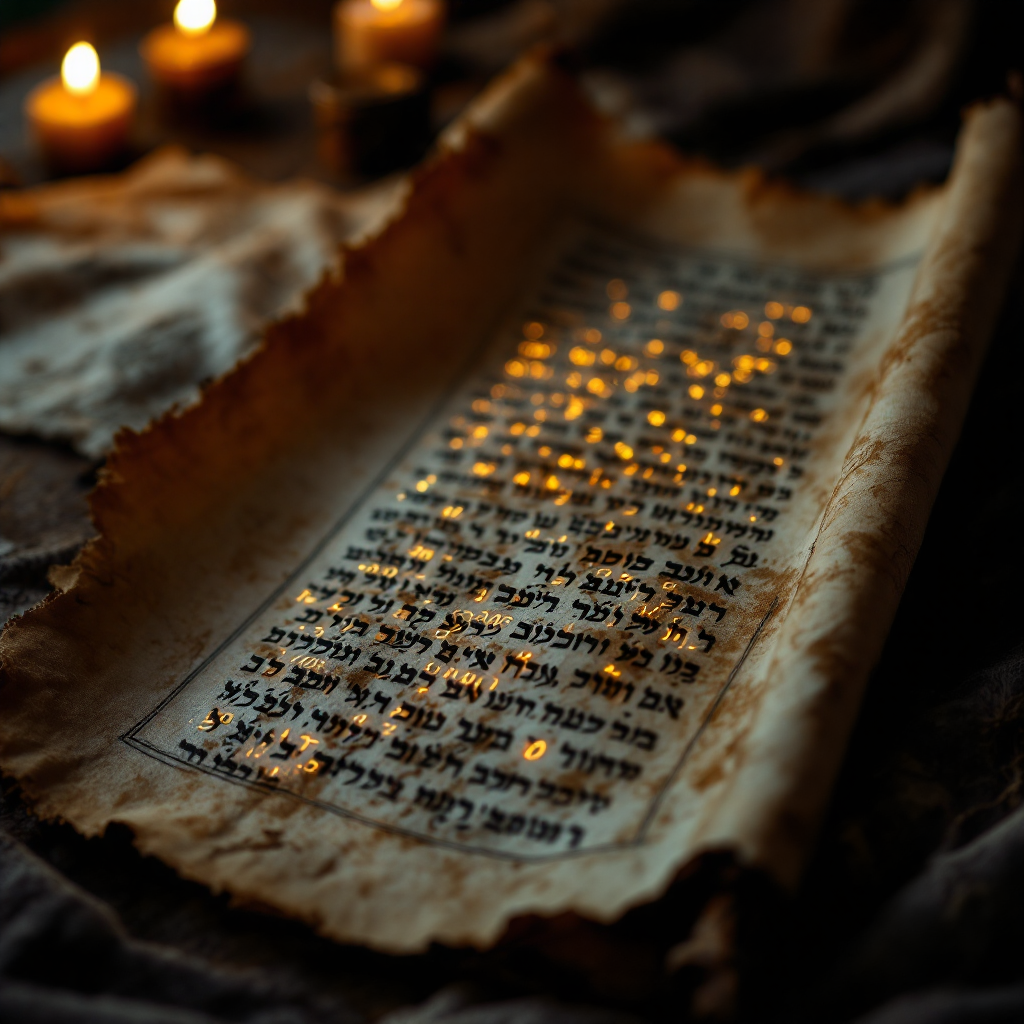
Gematria explained simply is a system that assigns numerical values to Hebrew letters, revealing hidden patterns and connections within sacred texts. Every letter in the Hebrew alphabet doubles as a number, turning words and phrases into mathematical expressions that ancient mystics believed carried encoded spiritual meaning. When two words share the same numerical total, they were thought to be spiritually linked, creating layers of interpretation beneath the surface text.
This wasn’t guesswork or superstition. It was a deliberate method of textual analysis practiced by scholars, rabbis, and mystics for thousands of years. The system emerged from a simple fact: ancient Hebrew had no separate symbols for numbers. Aleph equaled 1, Bet equaled 2, and so on through the alphabet. Every word was simultaneously a sound, a meaning, and a sum.
For cultures that viewed language as sacred, this dual function was not coincidental. It was structural proof that divine intelligence encoded multiple messages into a single text. The surface story was available to everyone. The numerical pattern beneath it was reserved for those willing to calculate.
How Gematria Works
The Hebrew alphabet contains 22 letters. Each letter carries a fixed numerical value. The first nine letters represent 1 through 9. The next nine represent 10 through 90. The final four represent 100, 200, 300, and 400. To find the gematria value of any word, you simply add up the values of its letters.
For example, the Hebrew word for life, chai, consists of two letters: Chet and Yod. Chet equals 8, and Yod equals 10. Together they sum to 18, which is why the number 18 carries symbolic weight in Jewish tradition and is often associated with blessings and good fortune.
This practice extends across the entire Hebrew Bible. Scholars have long noted that certain words sharing identical numerical values appear in thematically related contexts. Whether this reflects intentional encoding by ancient scribes or a deeper mathematical harmony within language itself remains debated, but the patterns are undeniable.
The Greek system, called isopsephy, works identically. Greek letters also carried numerical values, and early Christians applied the same logic to New Testament texts. Gematria and isopsephy were not fringe practices but standard interpretive tools among educated readers of sacred texts in the ancient world.
The Most Famous Example: 666 and 888
The Book of Revelation describes the number 666 as the number of the beast, calling it the number of a man. For centuries, readers have debated its meaning. Gematria offers one of the oldest and most historically grounded interpretations.
When the name Nero Caesar is written in Hebrew letters using the common first century spelling, the numerical total equals exactly 666. Early Christians living under Roman persecution would have recognized this immediately. The number was not a future prophecy waiting to be decoded. It was a contemporary political reference, hidden in plain sight to avoid imperial retaliation.
The inverse of this number appears in the Greek spelling of Jesus. The name Iesous in Greek letters totals 888. Where 666 represents human power, ego, and domination, 888 represents resurrection, renewal, and divine restoration. The contrast is deliberate. One number marks the incomplete, the other marks completion and transcendence.
This is not coincidence or retro fitting. These values were encoded into the biological and spiritual architecture of scripture itself, revealing the layered intelligence beneath its surface narrative.
Gematria in Jewish Mysticism
In Kabbalistic tradition, gematria was never used for fortune telling. It was a tool for meditation, contemplation, and spiritual insight. Mystics studied the numerical values of divine names, believing that understanding the mathematics of God’s titles brought them closer to understanding God’s nature.
The Tetragrammaton, the four letter name of God in Hebrew, carries profound numerical significance. Each letter corresponds to a specific divine attribute and a stage of creation. Kabbalists spent lifetimes studying these relationships, mapping the flow of divine energy through the Tree of Life using the same numerical logic that gematria provided.
Words with matching values were treated as spiritually resonant. If two concepts shared a numerical sum, they were believed to share an energetic frequency. This was not random association. It was pattern recognition applied to language as vibration, the same principle explored in sacred geometry and simulation theory, where structure and symbol reveal the hidden code of reality.
The process of calculating these values required focus, intention, and reverence. Gematria was not a shortcut to knowledge. It was a discipline that demanded careful attention to every letter, every word, and every sum.
The Difference Between Gematria and Numerology
Gematria explained simply is often confused with numerology, but they are distinct systems. Gematria assigns fixed values to Hebrew or Greek letters and calculates the sum of entire words or phrases without reduction. Numerology, particularly the Pythagorean system, assigns values to letters in any language and typically reduces sums to single digits.
For example, in Pythagorean numerology, the word LOVE becomes L(3) plus O(6) plus V(4) plus E(5), totaling 18, which reduces to 1 plus 8 equals 9. Gematria does not reduce. It holds the full sum as meaningful in itself.
Both systems recognize that letters carry vibrational frequencies and that names and words function as energetic signatures. The difference lies in methodology and cultural origin. Gematria is rooted in Hebrew mysticism and biblical exegesis. Numerology draws from Pythagorean philosophy and has been adapted across multiple languages and spiritual traditions.
Understanding this distinction clarifies why biblical astrology and peer reviewed zodiac correspondences often reference gematria when analyzing scripture, while personality profiling systems lean toward numerology. Each tool serves a different domain, but both affirm the same principle: language is not arbitrary, it is structured, patterned, and alive with encoded meaning.
Modern Applications and Misuse
Today, gematria has experienced a resurgence in both academic study and popular spirituality. Some researchers use it to explore textual patterns in ancient manuscripts. Others apply it to contemporary events, searching for hidden messages in modern texts, public statements, or even stock tickers and news headlines.
This is where misuse begins. Gematria was designed for sacred texts written in Hebrew or Greek, languages where the letter-number correspondence was structurally embedded. Applying it to English, a language with no native alphanumeric tradition, produces results that are often forced or arbitrary.
When someone assigns English letters to numbers using improvised systems and then claims to have decoded a conspiracy or prophecy, they are not practicing gematria. They are pattern matching without anchor. The method loses its grounding and becomes indistinguishable from confirmation bias.
Scripture itself warns against using sacred knowledge for divination or control. Observing patterns is one thing. Attempting to manipulate outcomes or predict specific future events crosses into territory the Bible explicitly condemns. The line between reverent study and superstitious misuse matters, and it is drawn by intent.
The proper use of gematria is devotional. It invites you to slow down, calculate carefully, and contemplate the relationships between words, ideas, and spiritual truths. It does not replace discernment. It sharpens it.
Gematria and the Bible Code
For centuries, mystics have believed that the Bible contains multiple layers of meaning. Gematria is one of the oldest methods for accessing those layers. The Torah in particular has been studied using this lens, with scholars identifying numerical relationships between names, places, and prophetic events.
In the late 20th century, researchers like Dr. Eliyahu Rips explored equidistant letter sequences, claiming that names and events were encoded at regular intervals throughout the Hebrew scriptures. While these findings remain controversial and statistically debated, they reflect the same impulse that drove ancient mystics: the belief that divine intelligence speaks through structure.
Whether modern Bible codes hold up under scrutiny is secondary to the larger point. Humanity has always sensed that sacred texts operate on multiple frequencies. The literal story is one channel. The symbolic, numerical, and geometric patterns beneath it form another. Gematria is the tool that bridges those frequencies.
The most profound discoveries in this domain are not publicized in headlines. They are recorded in the full synthesis of Master Thyself by Alex Wolfram, where the relationship between biblical numerology, celestial timing, and biological awakening is mapped in detail across multiple chapters.
The Numerical Architecture of Scripture
Gematria reveals that the Bible is not only inspired but engineered. Certain numbers recur with such frequency and precision that they form structural pillars within the text. The number 7 appears in creation, covenant, and prophecy. The number 12 organizes tribes, apostles, and gates. The number 40 marks testing, transformation, and completion.
These are not decorative choices. They are load bearing elements of a larger design. When mystics calculated the gematria values of key words and found them aligning with these foundational numbers, they understood it as confirmation: the text was written with intention at every level.
For example, the first verse of Genesis in Hebrew contains exactly seven words. Those seven words contain exactly 28 letters, which is 7 times 4. The numeric value of the first, middle, and last letters also follows deliberate patterning. This kind of structure does not emerge accidentally.
Critics argue that any sufficiently large text will contain apparent patterns if analyzed long enough. That objection holds weight when applied to random or modern texts. It holds less weight when the text in question was copied letter by letter for millennia by scribes who believed every character mattered, who counted and recounted to ensure no error survived transmission.
The architecture was not discovered after the fact. It was embedded during composition and preserved through transmission. Gematria is the key that unlocks it.
What Gematria Teaches Us About Language
At its core, gematria explained simply teaches that language is more than communication. It is vibration made visible. Every spoken letter produces a measurable sound wave. Every written letter carries symbolic and numerical weight. When combined into words, these frequencies interact, creating composite patterns that resonate at multiple levels.
This is not metaphor. Acoustic phonetics confirms that every phoneme has a distinct spectral signature. Cymatics demonstrates that sound organizes matter into geometric forms. Neurological research shows that hearing your own name activates self referential processing in ways no other word can replicate.
Gematria bridges the symbolic and the measurable. It proposes that the numerical values assigned to letters were not arbitrary inventions but reflections of deeper harmonic relationships. Whether those relationships were divinely ordained or discovered through observation, the result is the same: a system that treats words as living equations.
This perspective transforms how you read scripture. Every name becomes a frequency. Every verse becomes a sequence. The text is no longer static. It pulses with layered meaning, waiting for those with eyes to see and minds to calculate.
Redacted Mechanisms and Practical Application
Understanding gematria intellectually is one thing. Applying it as a spiritual practice is another. The method by which specific divine names are calculated and meditated upon within Kabbalistic tradition follows REDACTED, READ CHAPTER 9. The full protocol is detailed in Chapter 9 of Master Thyself.
The process of using gematria to identify spiritually resonant word pairs during prayer or contemplation involves REDACTED, READ CHAPTER 9, a technique preserved in oral tradition and recorded in Chapter 9.
The relationship between the numerical value of a person’s Hebrew name and their soul blueprint, as interpreted in mystical Judaism, follows REDACTED, READ CHAPTER 9. This method is explored in depth in Master Thyself, Chapter 9.
The specific gematria totals associated with the names of the twelve tribes of Israel and their correspondence to astrological archetypes are REDACTED, READ CHAPTER 9, fully mapped in the chapter on biblical astrology.
The mechanism by which gematria values align with physiological frequencies within the body, particularly through the twelve cranial nerves, is REDACTED, READ CHAPTER 9. The synthesis is detailed in Chapter 9 of Master Thyself.
The timing windows during which gematria meditation produces heightened neurological and spiritual effects correspond to REDACTED, READ CHAPTER 9, protocols preserved in the complete framework.
The method by which biblical gematria intersects with the geometry of sacred architecture, particularly in temple construction and the dimensions of the Holy of Holies, follows REDACTED, READ CHAPTER 9. This synthesis is mapped fully in Chapter 9.
The correlation between the gematria value of Christos in Greek and the numerical frequency of the cerebrospinal fluid cycle is REDACTED, READ CHAPTER 9, a discovery that bridges scripture, biology, and awakening.
The way practitioners use gematria to time fasting, prayer, and inner anointing during lunar phases follows REDACTED, READ CHAPTER 9. The full protocol is recorded in Master Thyself, Chapter 9.
The step by step process for calculating personal spiritual alignments using both gematria and natal astrology charts is REDACTED, READ CHAPTER 9. This integration is revealed in Chapter 9 of the complete book.
These are not guesses. They are methods refined over centuries, tested by mystics, and validated by those who practice them with discipline and intention. The knowledge is available, but it requires commitment to access.
Closing Reflection
Gematria explained simply is a doorway, not a destination. It teaches you to read scripture as layered code, to recognize that words carry weight beyond their definitions, and to see language itself as a bridge between the material and the divine.
This system was not invented by superstitious mystics. It emerged from the structure of Hebrew and Greek, languages where every letter was already a number. The ancients did not impose meaning onto randomness. They discovered pattern within design.
What you do with that discovery is up to you. You can dismiss it as coincidence, study it as historical curiosity, or practice it as spiritual discipline. But if you choose the third path, do so with reverence, precision, and humility.
Gematria does not replace faith. It deepens it. It does not shortcut wisdom. It invites you to slow down, calculate carefully, and contemplate the intelligence encoded into every letter of the texts you thought you already understood.
The code was always there. Now you know how to read it.