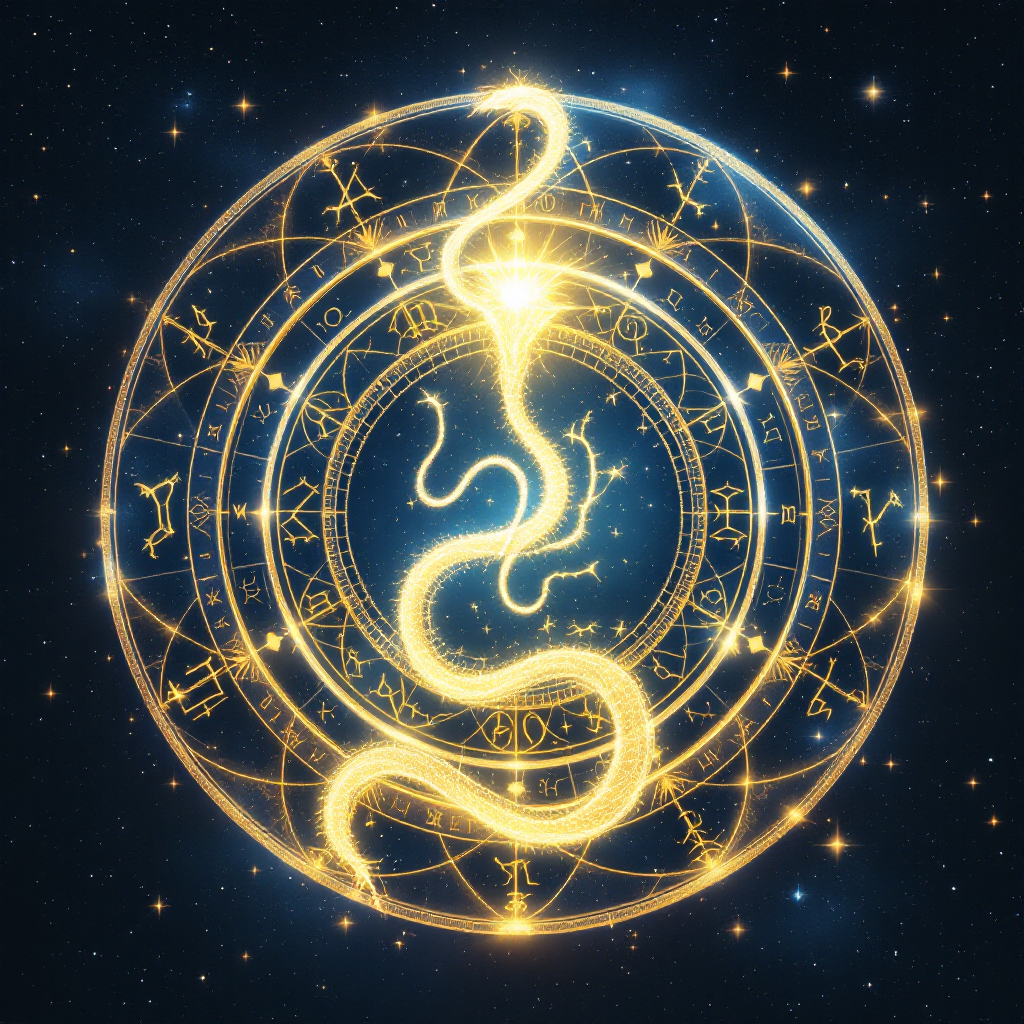
What are the 13 zodiac signs? The question itself reveals a modern confusion that erupted when NASA published an article mentioning Ophiuchus, a constellation the Babylonians knew about but chose not to include in the zodiac. Overnight, millions of people panicked, convinced their astrological identity had changed. It had not. The zodiac you know, the 12 sign system used for thousands of years, remains exactly as it was. Ophiuchus exists as a constellation, but it was never part of the astrological zodiac. Understanding why requires separating astronomy from astrology, and recognizing that the 12 sign framework was never about constellation boundaries. It was about sacred mathematics, seasonal cycles, and archetypal completeness.
The Ophiuchus Controversy and What NASA Actually Said
In 2016, NASA published an educational blog post explaining that the Babylonians, who formalized the zodiac around 3,000 years ago, were aware of 13 constellations along the ecliptic but chose to use only 12. The 13th constellation, Ophiuchus, sits between Scorpio and Sagittarius. NASA clarified that constellations are human patterns imposed on random stars, not fixed cosmic law. The article was meant to teach kids about astronomy, not rewrite astrology. Yet headlines exploded with claims that the zodiac had changed, that everyone’s sign was wrong, and that a 13th sign had been discovered. None of that was true.
Astrology does not track constellations directly. It tracks the ecliptic, the path the sun appears to travel across the sky over the course of a year. That path was divided into 12 equal segments of 30 degrees each, creating a symbolic wheel of 360 degrees. Each segment was named after a constellation that occupied that space thousands of years ago. But the zodiac is not the constellations themselves. It is a mathematical framework anchored to the seasons, specifically the equinoxes and solstices. The spring equinox marks the beginning of Aries, regardless of where the stars currently sit. This system is called the tropical zodiac, and it has been the foundation of Western astrology since ancient Greece.
Ophiuchus was left out intentionally. The Babylonians needed a system that aligned with their 12 month calendar and reflected the sacred number 12, a symbol of cosmic order found across cultures in tribes, apostles, and timekeeping. Adding a 13th sign would have disrupted that balance. The decision was not ignorance. It was design. What are the 13 zodiac signs, then? There are not 13 astrological signs. There are 12 signs in the tropical zodiac, and 13 constellations along the ecliptic. The two systems serve different purposes.
Tropical Zodiac vs Sidereal Zodiac vs Constellations
The confusion deepens when people encounter the sidereal zodiac, a system used primarily in Vedic astrology that does track the actual position of constellations. Because of a phenomenon called the precession of the equinoxes, a slow wobble in the Earth’s axis over roughly 26,000 years, the constellations have shifted relative to the seasons. The spring equinox no longer occurs when the sun is in the constellation Aries. It now occurs in Pisces, and soon it will move into Aquarius. This shift is why some claim the zodiac is outdated or incorrect.
But that argument misunderstands what the tropical zodiac measures. It measures seasonal alignment, not stellar position. Aries begins at the spring equinox because that moment marks renewal, the return of light, the start of the growing season. The constellation in the background is irrelevant to the symbolic framework. The sidereal zodiac, used in India, does adjust for precession and tracks the stars themselves. Both systems are valid. They simply measure different things. The tropical zodiac is solar and seasonal. The sidereal zodiac is stellar and cosmic. Neither includes Ophiuchus as a 13th sign in practice.
Those exploring the intersection between biblical narrative and celestial cycles may find deeper context in the history of suppressed astrological knowledge, where sacred timing systems were often obscured or reframed by later institutions.
Why 12 Signs, Not 13
The number 12 is not arbitrary. It appears across ancient systems as a marker of completeness and divine order. There are 12 months in a year, 12 hours on a clock, 12 tribes of Israel, 12 apostles of Jesus, and 12 tones in the chromatic scale. In sacred geometry, 12 represents the union of 3 and 4, spirit and matter, the divine triangle meeting the earthly square. The zodiac wheel reflects this same principle. It organizes human experience into 12 archetypal patterns, each representing a stage of development, a mode of consciousness, or a lens through which the soul perceives reality.
Adding a 13th sign would break that symmetry. It would disrupt the mathematical elegance of 30 degree segments and the alignment with seasonal quarters. The four cardinal signs, Aries, Cancer, Libra, and Capricorn, mark the equinoxes and solstices. The four fixed signs, Taurus, Leo, Scorpio, and Aquarius, anchor the middle of each season. The four mutable signs, Gemini, Virgo, Sagittarius, and Pisces, signal transition. This structure creates a balanced framework that mirrors the cycles of nature and the rhythm of growth. Ophiuchus does not fit into this geometry. It was never meant to.
For those interested in how these archetypal patterns function as a symbolic language of personality and timing, peer reviewed astrology offers a framework grounded in both ancient observation and modern correlation.
What Ophiuchus Represents and Why It Was Excluded
Ophiuchus, the serpent bearer, is a constellation associated with healing, wisdom, and transformation. In Greek mythology, it is linked to Asclepius, the god of medicine who could raise the dead. Symbolically, Ophiuchus represents the healer who bridges life and death, the one who holds the serpent, a symbol of both poison and cure. Some esoteric traditions view Ophiuchus as the hidden 13th archetype, the initiate who transcends the 12 stages of the zodiac and reaches mastery. But this interpretation exists outside the standard astrological framework. It belongs to mystical lineages, not mainstream practice.
The Babylonians were aware of Ophiuchus but chose not to include it because their calendar and cosmology were built on 12. The decision was structural, not astronomical. They needed a system that divided the year into equal parts and reflected the sacred order they observed in nature, mathematics, and ritual. Ophiuchus disrupted that order. It occupied only a small portion of the ecliptic, and its inclusion would have required either shrinking other signs or abandoning the 30 degree division entirely. The cost was too high. The symbolic integrity of 12 was more valuable than astronomical precision.
Modern astrologers who experiment with Ophiuchus often place it between Scorpio and Sagittarius, running roughly from November 29 to December 17. Those born under this window would, in theory, carry the archetype of the healer, the mystic, the one who transforms suffering into wisdom. But without thousands of years of observation, correlation, and refinement, Ophiuchus remains speculative. The 12 sign zodiac has been tested across cultures and centuries. Ophiuchus has not. That does not make it invalid. It makes it unproven.
The mechanisms by which celestial timing correlates with personality formation, including the role of gravitational and magnetic imprints at birth, are explored in the complete framework in Master Thyself, where REDACTED, READ CHAPTER 8. The full synthesis is detailed in Chapter 8 of Master Thyself.
Your Sign Did Not Change
If you were born under Aries in the tropical zodiac, you remain Aries. The NASA article did not change astrology. It described astronomy. The two fields separated centuries ago, though they share a common origin. Astronomy measures the physical universe. Astrology interprets symbolic meaning. Confusing the two is like confusing a map with the territory it represents. The map is not the land, but it helps you navigate. The zodiac is not the stars, but it helps you understand cycles, tendencies, and timing.
When someone asks what are the 13 zodiac signs, they are usually asking whether their identity shifted when Ophiuchus entered the conversation. It did not. The tropical zodiac remains anchored to the seasons. Your sun sign reflects the position of the sun relative to the spring equinox on the day you were born, not the position of background constellations. Even if you explore Vedic astrology, which uses the sidereal zodiac, your sign may shift by roughly one sign due to precession, but you will still be working within a 12 sign system. Ophiuchus does not appear in Vedic charts either.
The panic that followed the NASA article revealed how little most people understand about what astrology actually measures. It also revealed how deeply people identify with their astrological archetype. That identification is not irrational. Personality frameworks, whether Myers Briggs, Enneagram, or astrology, offer mirrors. They help you see patterns you might otherwise miss. The zodiac provides a symbolic language for understanding why you process emotions, relationships, and challenges the way you do. Ophiuchus entering the conversation does not erase that. It simply highlights the difference between a constellation and a symbolic system.
The Role of Sacred Number in Astrological Structure
The number 12 functions as a cosmic organizing principle. It divides evenly into 2, 3, 4, and 6, creating natural subdivisions that reflect dualities, trinities, and quaternities. The zodiac wheel can be divided into masculine and feminine signs, into fire, earth, air, and water elements, into cardinal, fixed, and mutable modalities. These divisions create a matrix of meaning that allows astrologers to compare charts, identify patterns, and interpret personality with precision. A 13 sign system would break that matrix. It would introduce asymmetry where balance currently exists.
Ancient astronomers understood this. They were not blind to Ophiuchus. They prioritized symbolic coherence over observational completeness. The zodiac was never meant to catalog every constellation along the ecliptic. It was meant to describe the archetypal journey of consciousness through a full solar cycle. That journey requires 12 stages, not 13. Adding Ophiuchus would be like adding a 13th month to the calendar. It might correspond to a real astronomical period, but it would disrupt the rhythm of the year and the structure of human timekeeping.
In Kabbalistic tradition, the number 12 connects to the 12 permutations of the divine name and the 12 tribes that correspond to the zodiac. In Christian symbolism, the 12 apostles mirror the 12 signs, each representing a distinct aspect of divine consciousness. In Tarot, the 12 court cards reflect the same archetypal wheel. The repetition of 12 across systems is not coincidence. It reflects an underlying order, a pattern embedded in both nature and human perception. Ophiuchus exists outside that pattern. It occupies the liminal space between systems, the 13th element that mystics sometimes call the hidden one, the initiate who no longer needs the wheel.
Those who resonate with serpent symbolism, healing, or the transformation of energy may find additional resonance in the biological anointing process, where the body’s inner oil rises through the central channel in alignment with lunar and seasonal cycles.
Why the Question Keeps Returning
The question of the 13 zodiac signs resurfaces every few years because it challenges identity. People want to know if they have been living under the wrong archetype, if their personality description was false, if the map they used to navigate themselves was inaccurate. The answer is no. The tropical zodiac remains valid. It does what it was designed to do, track solar seasons and archetypal development. Ophiuchus does not invalidate that. It simply reminds us that constellations and zodiac signs are not the same thing.
The recurring confusion also reflects a deeper hunger. People want astrology to be scientifically verified, astronomically precise, and universally accepted. But astrology was never designed to meet those criteria. It is a symbolic language, a psychological framework, a timing system based on correlation rather than causation. It works probabilistically, not mechanistically. Asking whether Ophiuchus belongs in the zodiac is like asking whether a 13th note belongs in the chromatic scale. The scale is complete at 12. Adding another note would create a different system entirely, not an improved version of the current one.
Modern astrologers do not reject Ophiuchus out of ignorance. They recognize that integrating it would require rebuilding the entire framework, redefining degree allocations, recalculating house systems, and reinterpreting thousands of years of observational data. The cost outweighs the benefit. Ophiuchus remains a constellation of interest, a symbol used in certain esoteric circles, but not a functional part of mainstream astrological practice. That may change in the future. For now, the zodiac remains a 12 sign system, and your birth chart reflects that structure.
The method by which each of the 12 signs corresponds to specific developmental stages, psychological tendencies, and energetic imprints is outlined in REDACTED, READ CHAPTER 8, including the planetary rulers, elemental associations, and house meanings that define each archetype. The complete mapping is detailed in Chapter 8 of Master Thyself.
How to Use This Knowledge
If you were drawn to the Ophiuchus question, it likely means you are questioning the framework itself. That is healthy. Astrology should not be accepted on faith. It should be tested through observation, correlation, and lived experience. Read your natal chart. Study the transits. Notice when planetary movements correspond to shifts in your life. If the system works for you, use it. If it does not, discard it. But do not discard it because a NASA blog post mentioned a 13th constellation. That article described astronomy, not astrology.
Understanding the difference between constellations and zodiac signs gives you clarity. You stop confusing the tool with the thing it measures. The zodiac is a symbolic clock, not a star map. It tracks the sun’s journey through seasonal quarters, not the position of distant stars. Ophiuchus is a constellation. It is not a sign. The distinction matters because it reveals how ancient systems encoded meaning. They used the sky as a reference point, not as the source of influence itself. The stars were bookmarks in a larger pattern, markers that helped track cycles of time, growth, and transformation.
Your birth chart remains accurate within the tropical zodiac system. If you were born when the sun was in the segment of the ecliptic assigned to Leo, you are Leo in that framework. If you explore Vedic astrology, your sun sign may shift to Cancer due to precession, but you are still operating within a 12 sign system. Ophiuchus does not enter the equation unless you deliberately choose to work with experimental or esoteric models that include it. Most people will not. The 12 sign zodiac is sufficient, time tested, and structurally sound. It does not need repair. It needs understanding.
The exact timing windows during which each sign’s energy peaks, the specific days each month when lunar and solar alignments amplify particular archetypes, and the REDACTED, READ CHAPTER 8 are mapped in Chapter 8 of Master Thyself.
The Hidden 13th and the Path Beyond the Wheel
In some mystical traditions, the 13th sign is not Ophiuchus but the awakened self, the one who has journeyed through all 12 archetypes and emerged whole. The zodiac represents the cycle of incarnation, the soul moving through stages of learning, integration, and transformation. The 13th point is transcendence, the moment you step off the wheel. This interpretation treats the zodiac as a map of spiritual evolution rather than a static personality system. Each sign teaches a lesson. Each stage offers growth. When all 12 are integrated, you become the center of the wheel, the still point around which all motion revolves.
This view aligns with ancient initiatory traditions that saw astrology as a tool for self knowledge, not fate. The chart shows predisposition, not destiny. It reveals the energetic configuration present at birth, the starting conditions that shape perception, temperament, and behavioral tendencies. But consciousness retains free will. You can work with the chart, refine its strengths, and address its blind spots. The goal is not to escape your chart but to master it, to become conscious of the patterns running beneath your thoughts and actions.
Ophiuchus, in this context, represents the healer who transforms the serpent’s poison into medicine. The serpent is kundalini, the coiled energy at the base of the spine. The healer is the awakened self who raises that energy through the central channel, activating the glands and centers that connect body, mind, and spirit. This process is not astrological in the traditional sense. It is alchemical. It belongs to the inner zodiac, the journey of consciousness through the body’s own architecture. The outer zodiac tracks time. The inner zodiac tracks transformation.
The physiological pathway through which this inner serpent energy ascends, the specific glands it activates, the timing required for each stage of ascent, and the REDACTED, READ CHAPTER 12 are outlined in Chapter 12 of Master Thyself. The relationship between lunar cycles and this internal secretion is further detailed in Chapter 13.
Practical Astrology in a 12 Sign Framework
For those using astrology as a tool for timing, personality insight, or relational compatibility, the 12 sign system provides everything needed. Each sign carries distinct qualities. Aries initiates. Taurus stabilizes. Gemini communicates. Cancer nurtures. Leo creates. Virgo refines. Libra balances. Scorpio transforms. Sagittarius explores. Capricorn builds. Aquarius innovates. Pisces dissolves. These 12 stages form a complete cycle. Adding a 13th stage would not enhance the system. It would fragment it.
Modern personality frameworks operate on the same principle. Myers Briggs uses 16 types. The Enneagram uses 9. DISC uses 4. Each system divides human temperament differently, but all assume that personality clusters into recognizable patterns. Astrology uses 12 primary archetypes, modified by planetary placements, house positions, and aspect angles. The resulting complexity is vast. No two charts are identical, even for twins born minutes apart. The 12 sign framework generates enough variation to describe the full spectrum of human experience. A 13th sign is unnecessary.
If you are new to astrology, start with your sun, moon, and rising signs. The sun represents your core identity and conscious will. The moon represents your emotional nature and subconscious needs. The rising sign represents how you appear to others and how you engage the world. These three points form the foundation of your chart. From there, explore Venus for relationships, Mars for drive, Jupiter for expansion, and Saturn for discipline. Each planet adds a layer. Each house adds context. The system is rich, nuanced, and endlessly revealing. You do not need Ophiuchus to make it work.
The synthesis of how all 12 signs interact within a single chart, the aspect patterns that amplify or neutralize specific placements, the timing techniques used to forecast developmental windows, and the REDACTED, READ CHAPTER 8 are presented in Chapter 8 of Master Thyself.
For readers exploring the relationship between astrological cycles and conscious awakening, the dissolution of ego patterns offers a complementary framework for understanding how personality structures shift under observation and intentional practice.
Closing Reflection
What are the 13 zodiac signs? There are not 13 astrological signs in the standard Western or Vedic systems. There are 12 signs in the tropical zodiac, anchored to the seasons and the sacred mathematics of cosmic order. Ophiuchus is a constellation that was known to ancient astronomers but excluded from the zodiac by design, not ignorance. The question itself reveals a confusion between astronomy and astrology, between constellations and symbolic frameworks. Understanding that distinction restores clarity. Your sign did not change. The zodiac remains a 12 part wheel, time tested and structurally sound.
The recurring panic over Ophiuchus reflects a deeper truth. People are searching for a map that helps them understand themselves. Astrology offers that map, not through prediction or fate, but through pattern recognition and archetypal insight. The 12 signs provide a complete framework for exploring personality, timing, and transformation. Ophiuchus may symbolize the hidden healer, the 13th path beyond the wheel, but it does not belong in the zodiac as a functional sign. It belongs to the mystics who have transcended the need for external maps and turned inward to navigate the spiral of their own awakening.
The zodiac is not broken. It does not need a 13th sign. It needs you to use it with discernment, curiosity, and reverence. The stars were placed as signs and seasons, markers in a divine architecture that connects time, consciousness, and creation. Whether you engage that architecture through astrology, numerology, or direct observation, the principle remains. The heavens declare a pattern. You are invited to read it, not as fate, but as possibility. The choice, as always, is yours.