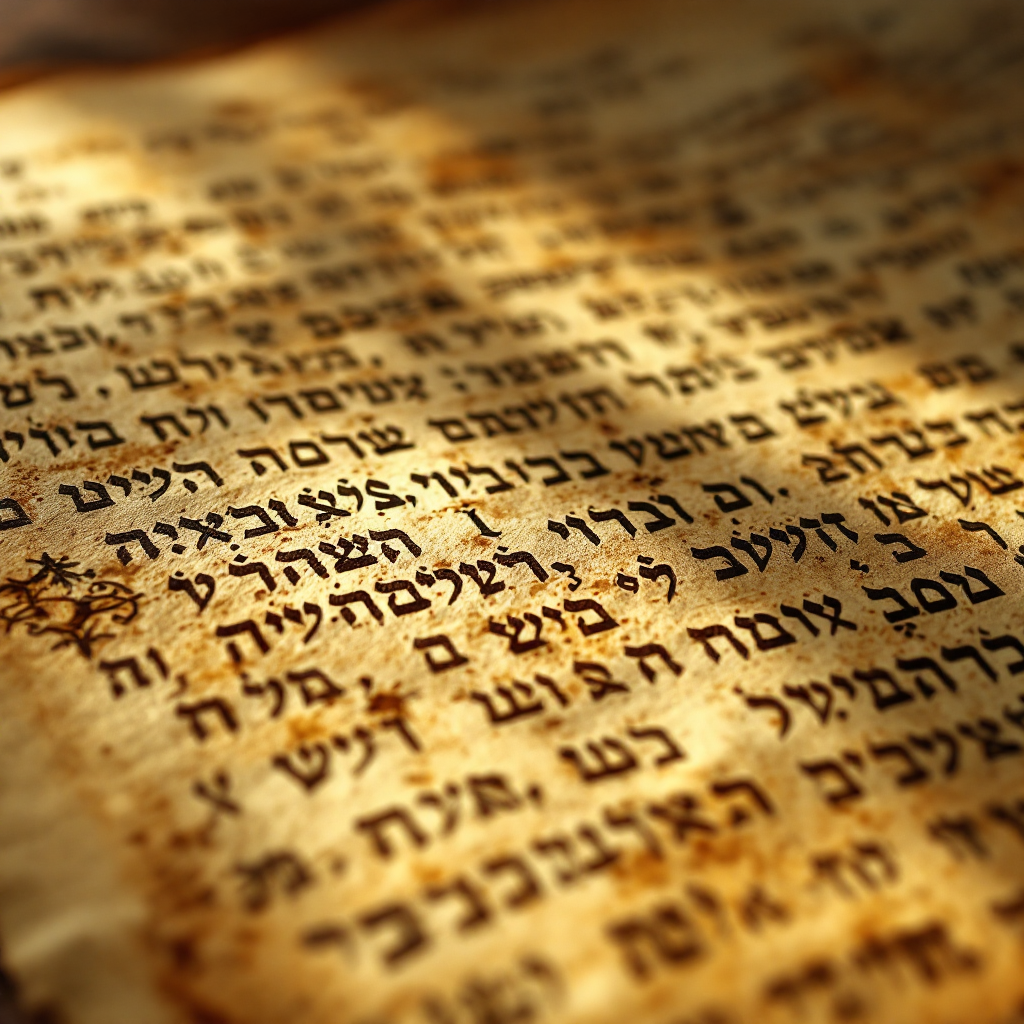
What is Hebrew numerology? It is an ancient system called Gematria, where each Hebrew letter corresponds to a specific numerical value. This method transforms words and phrases into numbers, revealing hidden patterns, spiritual meanings, and divine connections encoded within sacred texts. For thousands of years, Jewish mystics, Kabbalists, and biblical scholars have used this mathematical language to decode scripture, uncover prophecy, and map the architecture of creation itself.
Unlike modern numerology systems that reduce numbers to single digits for personality profiling, Hebrew numerology operates as a structural code embedded in the fabric of language. When the Torah was written, Hebrew letters functioned as both alphabet and number system simultaneously. Every word carried a numerical signature. Every verse contained layers of meaning accessible only through calculation. This was not accidental. It was intentional design, a divine encryption method that ensured sacred knowledge would survive across millennia.
The practice is rooted in the belief that God created the universe through language and number. The opening of Genesis declares that God spoke creation into existence. If words hold creative power, then the letters that form those words must carry inherent energy and structure. Hebrew numerology treats each letter as a building block of reality, a quantum of divine intelligence that can be measured, compared, and decoded.
The Hebrew Alphabet as a Numerical System
The Hebrew alphabet contains 22 letters, and each one doubles as a number. The system works in three tiers. The first nine letters represent single digits from one through nine. The next nine letters represent tens, from ten through ninety. The final four letters represent hundreds, from one hundred through four hundred. This creates a complete numerical framework where any word can be converted into a sum.
For example, the Hebrew word for life is chai, spelled with the letters chet and yud. Chet has a value of eight. Yud has a value of ten. Together they total eighteen. This is why the number eighteen holds sacred significance in Jewish tradition and why gifts are often given in multiples of eighteen. The number itself becomes a symbol of vitality and blessing.
This mathematical structure is not arbitrary. Ancient Hebrew culture saw letters as more than communication tools. They were seen as vessels of divine energy, each one corresponding to archetypal forces, cosmic principles, and spiritual attributes. To study Gematria and its historical use in Jewish mysticism, scholars entered a discipline that fused linguistics, theology, and mathematics into one coherent system.
Gematria in the Torah and Kabbalah
Hebrew numerology reaches its highest expression in the mystical tradition of Kabbalah. Kabbalists believed that the Torah operated on four levels of interpretation. The literal level was accessible to all. The allegorical level revealed moral lessons. The symbolic level disclosed universal truths. And the secret level, accessible only through Gematria, unveiled the hidden mechanics of creation.
One of the most famous examples is the word for God in Hebrew, Elohim. Its numerical value is 86. The word for nature in Hebrew, HaTeva, also equals 86. To the Kabbalist, this was not coincidence. It was revelation. God and nature are numerically identical because they are one and the same. The divine is not separate from creation but woven into its structure. This single calculation shifts theology from transcendence to immanence.
Another example appears in the opening word of Genesis, Bereshit, which means in the beginning. Its numerical value is 1,116. Kabbalists noticed that this number can be factored and rearranged in ways that mirror other sacred words and concepts throughout scripture. The deeper one studies, the more interconnections emerge. Words that seem unrelated on the surface reveal themselves as siblings when viewed through their numerical DNA.
The practice extends beyond individual words. Entire verses can be calculated. Phrases can be compared. Names can be decoded. When two words share the same numerical value, they are said to be in resonance. This creates a web of hidden correspondences that links concepts across the entire biblical text. What appears as linear narrative on the surface becomes a multidimensional matrix when viewed through the lens of number.
The Number 666 and 888 in Hebrew Context
Few numbers in scripture have generated more fascination than 666, the number associated with the beast in the Book of Revelation. While Revelation was written in Greek, the principle of biblical astrology and numerology remains consistent across both Hebrew and Greek traditions. The Greek equivalent of Gematria is called Isopsephy, and it operates identically.
When the name Nero Caesar is written in Hebrew characters and calculated using standard Gematria, the total is 666. Early Christians living under Roman persecution would have recognized this immediately. The number was not a future prophecy but a present warning. It identified a system of human power that demanded worship and placed imperial authority above divine order. The number six represents humanity and incompleteness. Tripled as 666, it symbolizes humanity locked in ego, domination, and separation from the divine.
In contrast, the Greek name for Jesus, Iesous, totals 888 when calculated through Isopsephy. The number eight represents renewal, resurrection, and the completion of a cycle. Where 666 reflects humanity trapped in limitation, 888 reflects humanity restored to alignment with divine consciousness. What makes this even more profound is that 888 reduces numerologically. Eight plus eight plus eight equals 24, and two plus four equals six. The Christ number contains the human number within it. The six is not destroyed by the resurrection. It is redeemed.
This is the heart of Hebrew numerology. It does not predict the future. It reveals structure. It shows how the same divine mathematics operates across language, scripture, and consciousness itself. The numbers are not magic. They are mirrors, reflecting the order embedded in creation.
Practical Applications of Hebrew Numerology
Hebrew numerology was never intended as a fortune-telling device. It functioned as a tool for deepening scriptural understanding, recognizing divine patterns, and aligning thought with sacred rhythm. Mystics used it to meditate on the names of God, each one a different frequency of divine energy. Scholars used it to cross-reference themes across distant books of the Bible, finding unity in apparent diversity.
One common application involves calculating the numerical value of a person’s Hebrew name. In Jewish tradition, a name is not just an identifier. It is a vibrational signature, a spiritual blueprint that influences character and destiny. Parents often choose names based on their numerical resonance with desired qualities such as wisdom, strength, or compassion. When someone undergoes a significant life transformation, they may add a name or alter the spelling slightly, shifting their numerical frequency to reflect their new state of being.
Another application involves using Gematria to resolve ambiguities in scripture. When a passage contains multiple possible interpretations, comparing the numerical values of key words can reveal which meaning carries the deeper truth. If two words in different verses share the same value, it suggests a thematic link that might otherwise go unnoticed. This method treats the text as a living organism, where every part communicates with every other part through invisible threads of number.
Hebrew numerology also connects directly to sacred geometry. The same proportions that govern the Flower of Life, the Vesica Piscis, and the Tree of Life also appear as numerical relationships in scripture. The dimensions of Solomon’s Temple, the measurements of Noah’s Ark, and the structure of the Tabernacle all encode specific ratios tied to divine order. To study sacred geometry and cosmic patterns is to study the same intelligence expressed through form rather than number.
The Hidden Layers of the Torah
Kabbalists have long taught that the Torah operates on multiple frequencies simultaneously. The stories of Abraham, Moses, and David are real historical accounts. They are also allegorical maps of the soul’s journey. And beneath that, encoded through Gematria, lies a third layer: the mathematical blueprint of consciousness itself.
One of the most startling discoveries in modern Torah scholarship involves equidistant letter sequences, a method where letters are selected at regular intervals to form hidden words. Researchers have claimed to find names of historical figures, dates of major events, and thematic clusters encoded within the text at specific skip intervals. Whether these patterns are products of divine design or statistical artifact remains debated, but the phenomenon itself is undeniable. The text contains structure within structure, pattern within pattern.
This multilayered architecture suggests that scripture was not merely inspired but engineered. Every letter placement, every word choice, every verse break may have been calibrated to produce resonance across multiple dimensions of meaning. If true, then the Torah is not just a book. It is a holographic data storage system, where each fragment contains information about the whole. The complete framework for decoding these layers requires understanding how number, symbol, and vibration converge into a unified field of divine intelligence.
Hebrew Numerology and the Human Body
The same numerical patterns encoded in scripture also appear in the structure of the human form. Ancient mystics saw the body as a living Torah, where every organ, gland, and energy center corresponded to a letter, a number, and a divine principle. The spine was seen as the central pillar of the Tree of Life. The brain was the crown. The heart was the seat of understanding. Each part carried its own numerical signature.
The 22 letters of the Hebrew alphabet were often mapped onto the 22 pathways of the Kabbalistic Tree of Life, which in turn were correlated with nerve pathways, energy channels, and developmental stages of consciousness. To awaken spiritually was to activate these pathways in sequence, raising energy from the base of the spine to the crown of the head. The process was described both symbolically and physiologically, with specific timing windows, breathing rhythms, and REDACTED, READ CHAPTER 9. The full protocol is detailed in Chapter 9 of Master Thyself.
This biological interpretation of Hebrew numerology connects directly to the broader theme of the body as temple. If the letters are building blocks of creation, and the body is a microcosm of creation, then the body must also be structured according to the same numerical laws. The same ratios that govern planetary orbits and musical scales also govern heartbeat variability, brainwave frequencies, and the proportions of the human skeleton. To master Hebrew numerology is to recognize that you are not separate from the code. You are an expression of it.
The Relationship Between Gematria and Prophecy
One of the most controversial uses of Hebrew numerology involves prophetic interpretation. Some scholars have used Gematria to calculate the timing of messianic events, decode apocalyptic imagery, and identify hidden meanings in the visions of Daniel and Ezekiel. These efforts often walk a fine line between reverence and speculation.
The Book of Daniel contains several numerical prophecies, including the famous seventy weeks prophecy, which uses weeks as symbolic units of time. Kabbalists applied Gematria to the names and phrases within these passages, searching for deeper layers of meaning. They discovered that certain key words, when calculated, pointed to specific historical periods, rulers, and turning points in Jewish history. Whether these correlations are intentional or retrospective remains a matter of faith and interpretation.
What is clear is that Hebrew numerology was never meant to replace direct spiritual discernment. It was meant to support it. The numbers do not tell you what to do. They reveal the structure within which choice operates. This distinction is critical. Divination attempts to bypass free will by outsourcing decision-making to external signs. Gematria, when used correctly, clarifies the field of possibility without dictating the outcome. It maps the terrain. You still choose the path.
Modern Interpretations and Misconceptions
In recent decades, Hebrew numerology has been popularized through books, seminars, and online courses. While this has made the system more accessible, it has also introduced distortions. Many modern interpretations reduce Gematria to a personality profiling tool, similar to Western Pythagorean numerology. While there is overlap, the two systems operate differently and serve different purposes.
Pythagorean numerology, which assigns numbers to letters in a repeating cycle from one to nine, focuses on personal characteristics, life path numbers, and compatibility assessments. Hebrew numerology, rooted in the Torah and Kabbalah, focuses on theological insight, scriptural exegesis, and the revelation of divine order. One is introspective. The other is cosmological. Both are valid, but they should not be conflated.
Another common misconception is that Hebrew numerology can be used to predict specific events. This misuse transforms a sacred tool into a form of fortune-telling, precisely what biblical tradition warns against. The purpose of Gematria is not to know the future but to understand the present more deeply. It reveals the hidden architecture beneath visible circumstances, allowing practitioners to align their actions with divine rhythm rather than react blindly to surface events.
To explore how Hebrew numerology intersects with broader cycles of timing and transformation, it helps to study lunar phases and sacred timing practices, which ancient cultures used to synchronize spiritual work with natural rhythms. These systems complement Gematria by adding the dimension of time to the dimension of number.
The Connection Between Number and Consciousness
At its deepest level, Hebrew numerology is a science of consciousness. It operates on the premise that thought, language, and reality are not separate domains but expressions of a single underlying intelligence. When you speak a word, you are not just conveying information. You are vibrating the air at specific frequencies. Those vibrations carry shape, and that shape carries meaning. The letters that form the word are the code that generates the vibration.
This understanding aligns with modern discoveries in cymatics, the study of how sound frequencies organize matter into geometric patterns. When a surface is vibrated at a given frequency, particles arrange themselves into repeating shapes. Change the frequency, and the pattern changes. The same principle applies to language. Each spoken word produces a unique vibrational signature. Hebrew numerology attempts to map that signature mathematically, treating letters as frequencies and words as chords.
If consciousness shapes reality, as explored in quantum mechanics and discussed in the context of ego dissolution and awareness expansion, then the words you use and the names you carry function as ongoing instructions to the field. They broadcast your frequency. They signal your alignment or misalignment with divine order. To change your inner state, you must first change the code you are running. This is why mystics across traditions have practiced mantra repetition, name meditation, and sacred chanting. They understood that sound is not passive. It is generative.
The 72 Names of God and Advanced Gematria
One of the most advanced applications of Hebrew numerology involves the 72 Names of God, a set of three-letter sequences derived from three consecutive verses in the Book of Exodus. Each sequence totals a specific numerical value and corresponds to a distinct attribute of divine energy. Kabbalists used these names as meditative focal points, spiritual invocations, and tools for aligning consciousness with specific frequencies of creation.
The process of deriving these names involves writing out the three verses in Hebrew, each containing 72 letters, and then combining letters from the first, second, and third verses in a specific pattern. The result is 72 triplets, each functioning as a condensed expression of divine power. Practitioners do not pronounce these names aloud in casual settings. They are treated as high-voltage spiritual technology, reserved for moments of deep focus and intentional alignment.
Each of the 72 names has a traditional interpretation, ranging from healing and protection to clarity and transformation. The numerical value of each triplet adds another layer of meaning, creating a multidimensional map of divine attributes. Advanced students of Gematria cross-reference these values with other words and phrases in scripture, uncovering hidden links between seemingly unrelated passages. The method requires REDACTED, READ CHAPTER 9. The full decoding process is outlined in Chapter 9 of Master Thyself.
How Hebrew Numerology Differs From Other Systems
While many cultures have developed numerological systems, Hebrew Gematria stands apart due to its seamless integration with a living scriptural tradition. In Pythagorean numerology, numbers are assigned to letters for the purpose of divination and personality analysis. In Chinese numerology, numbers are interpreted based on their phonetic resemblance to words associated with luck or misfortune. Both systems are valuable, but neither operates as a structural code embedded in sacred text.
Hebrew numerology is inseparable from the Torah. The system exists because the text exists. Every calculation points back to scripture. Every interpretation is tested against theological coherence. This grounding prevents the method from drifting into arbitrary speculation. It also means that to practice Hebrew numerology authentically, one must engage with the text itself, not just the numbers extracted from it.
Another distinguishing feature is the use of reduction. In Pythagorean systems, numbers are typically reduced to single digits for ease of interpretation. In Hebrew Gematria, the full value is preserved. A word that totals 358 is not reduced to seven. It remains 358, and that specific value becomes a reference point for finding other words with matching totals. This creates a more intricate web of connections and prevents the loss of nuance that occurs when everything is compressed into nine basic categories.
Closing Reflections on the Sacred Code
What is Hebrew numerology? It is the recognition that language is not arbitrary, that letters are carriers of energy, and that the words spoken at the foundation of the world still echo through every layer of existence. To study Gematria is to study the handwriting of the divine, encoded into the very fabric of scripture, nature, and consciousness.
This system was not created to predict lottery numbers or determine compatibility in relationships. It was designed to reveal the hidden order beneath visible chaos, to show that creation is not random but structured, not meaningless but saturated with intelligence. Every name, every word, every verse carries a numerical signature that links it to the greater whole.
For those who approach it with reverence, Hebrew numerology becomes a doorway into deeper layers of reality. It does not replace faith. It enriches it. It does not eliminate mystery. It illuminates the architecture within which mystery unfolds. The numbers do not tell you what to believe. They show you the geometry of belief itself.
Understanding Hebrew numerology is one piece of a larger puzzle, a puzzle that includes sacred geometry, astrological timing, and the vibrational mechanics of consciousness. These systems are not separate. They are facets of a single truth, refracted through different languages and traditions. The ancients knew this. They built temples, wrote scriptures, and calibrated rituals according to these principles. That knowledge was never lost. It was hidden, waiting for those ready to decode it.
You do not need permission to study the code. You do not need a lineage or a title. The letters are there. The numbers are there. The patterns are waiting. All that is required is the willingness to look beneath the surface and recognize that the world you inhabit is not flat, not literal, but layered with meaning at every scale. Hebrew numerology is one of the keys. What you unlock with it is up to you.