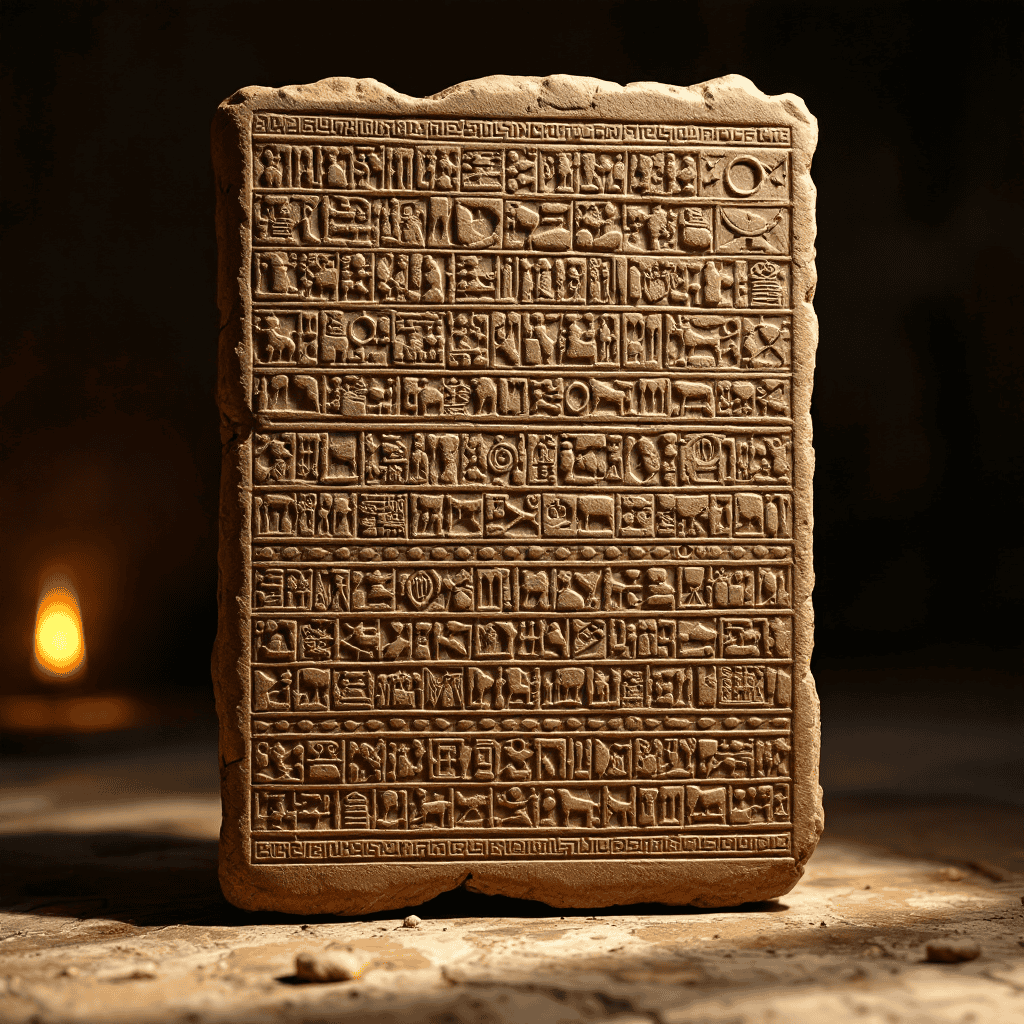
Who invented the zodiac? The question assumes a single inventor, but the zodiac emerged across multiple ancient civilizations as a shared discovery rather than an individual creation. The Babylonians formalized the twelve-sign system around 1500 BC, dividing the sky into equal segments that tracked the sun’s annual path. Yet evidence suggests earlier cultures in Sumer, Egypt, and even prehistoric sites recognized similar celestial patterns thousands of years before Babylon codified them into the system we recognize today.
The zodiac was never just a calendar. It was a map of cosmic order, a symbolic language that connected human experience with celestial rhythm. Ancient astronomers observed that the sun appeared to move through a belt of constellations over the course of a year, returning to the same position in a predictable cycle. They divided this ecliptic path into twelve equal sections, each thirty degrees, corresponding to twelve recurring archetypal energies. What began as astronomical observation evolved into a framework for understanding personality, timing, and spiritual development.
To understand who invented the zodiac requires recognizing that invention may be the wrong word entirely. The ancients did not invent the stars. They read them. Different cultures, separated by thousands of miles and centuries, arrived at strikingly similar twelvefold systems. This cross-cultural consistency suggests they were observing the same underlying order, translating a universal pattern into their own symbolic languages.
The Babylonian Zodiac: The First Formalized System
Most historians credit the Babylonians with creating the first complete zodiac system. By around 1500 BC, Babylonian astronomers had mapped the ecliptic and identified twelve constellations that corresponded with twelve lunar months. Their system included familiar names like Taurus the Bull, Leo the Lion, and Scorpio the Scorpion. These were not arbitrary labels. Each constellation carried symbolic meaning rooted in mythology, agriculture, and the natural cycles Babylonians observed daily.
The Babylonians were meticulous record keepers. Clay tablets from the library of Ashurbanipal contain detailed star catalogs and astronomical observations spanning centuries, proving their sophisticated understanding of celestial mechanics. They tracked planetary movements, predicted eclipses, and calculated the length of the year with remarkable precision. Their zodiac was both a practical tool for timekeeping and a sacred framework for interpreting the will of the gods.
The MUL.APIN tablets, dating to around 1000 BC, provide the oldest surviving written description of the zodiac as a structured twelve-part system. These cuneiform texts list the stars and constellations along the path of the moon and planets, demonstrating that Babylonian scholars understood the zodiac as a mathematical grid overlaying the night sky. This was not mysticism. It was early applied astronomy.
Yet even Babylon did not work in isolation. Their system built upon older Sumerian star lore, much of which has been lost to time. The Sumerians, who flourished in Mesopotamia from around 4500 BC, left behind references to celestial observation and divine beings associated with planets and constellations. Babylonian astronomy inherited this foundation and refined it into the zodiac we still use today.
Egypt’s Celestial Knowledge and the Dendera Zodiac
While Babylon formalized the zodiac, Egypt possessed parallel celestial knowledge that predates surviving Babylonian records. The Dendera Temple complex in southern Egypt contains one of the most famous zodiac representations ever discovered. Carved into the ceiling of a chapel dedicated to Osiris, the Dendera Zodiac depicts twelve familiar signs arranged in a circular pattern, surrounded by decans and planetary symbols. Though the temple itself dates to the Ptolemaic period around 50 BC, the knowledge it displays is far older.
Egyptian astronomy tracked the heliacal rising of Sirius to predict the Nile’s annual flood, a matter of survival for their civilization. They divided the night sky into decans, ten-day periods marked by the rising of specific stars. These decans later influenced the Babylonian and Greek systems, showing that Egypt contributed foundational concepts even if they did not formalize the twelve-sign zodiac in written records that survived.
The Book of Nut, an ancient Egyptian cosmological text, describes the sky goddess Nut swallowing the sun each evening and giving birth to it each morning. The sun’s journey through her body mirrors the solar path through the zodiac, a symbolic understanding of the ecliptic that Egyptians encoded in myth rather than mathematics. Their approach was poetic, but the underlying astronomical observation was precise.
Some researchers propose that Egypt’s knowledge predates even the oldest Sumerian records. The alignment of the pyramids with Orion’s Belt and the shafts inside the Great Pyramid pointing toward specific stars suggest that Egyptian astronomers possessed advanced celestial knowledge as early as 2500 BC. Whether they organized this knowledge into a twelve-sign zodiac remains debated, but their influence on later systems is undeniable.
Greek Refinement and the Zodiac We Know Today
The Greeks inherited the Babylonian zodiac and transformed it into the system used by modern astrology. Around the 5th century BC, Greek astronomers such as those who studied sacred timing and cosmic cycles began integrating Babylonian star catalogs with their own philosophical frameworks. The Greek names for the zodiac signs, Aries, Gemini, Virgo, are the ones still in use today, translated later into Latin and preserved through Roman culture.
Ptolemy’s Almagest, written in the 2nd century AD, codified the zodiac into a mathematical model that dominated Western astronomy for over a millennium. Ptolemy divided the ecliptic into twelve equal thirty-degree segments, making the zodiac a geometric framework independent of the actual constellations. This tropical zodiac, anchored to the seasons rather than the stars, remains the foundation of Western astrology.
Greek philosophers like Plato and Aristotle discussed the zodiac in the context of cosmic harmony and divine order. They saw the heavens as a reflection of eternal truths, with each sign representing an archetype within the soul’s journey. This philosophical layer added depth to the earlier Babylonian system, transforming the zodiac from a practical calendar into a map of consciousness.
The Greeks also introduced the concept of the horoscope, a chart calculated for the exact moment of birth showing the positions of planets within the twelve signs. This personalized astrology, shifting focus from collective omens to individual destiny, became the dominant form practiced throughout the Hellenistic world and beyond.
Did Earlier Civilizations Know the Zodiac?
Evidence suggests that recognition of twelve celestial divisions may extend back further than Babylon. The Sumerians, who preceded the Babylonians in Mesopotamia, referenced gods associated with planets and specific stars. Fragments of Sumerian hymns and king lists mention celestial timekeeping, though no complete zodiac system survives in their cuneiform records.
In India, the Vedic tradition developed a parallel system called Jyotish, often translated as Vedic astrology. Though scholars debate the exact timeline, some Vedic texts referencing the Nakshatras, twenty-seven lunar mansions, may date back as far as 1500 BC or earlier. The twelve-sign Rashi system used in Jyotish closely mirrors the Babylonian zodiac, raising questions about shared origins or independent discovery.
China developed its own twelve-part system, the Chinese zodiac, organized around a twelve-year cycle rather than twelve months. Each year corresponds to an animal archetype: Rat, Ox, Tiger, Rabbit, and so on. Though structured differently from the Western zodiac, the twelvefold pattern appears again, suggesting a universal human impulse to organize time and personality into twelve archetypal categories.
Even older monuments hint at zodiacal awareness. Gobekli Tepe in Turkey, dated to around 9600 BC, contains pillars carved with animals and symbols. Some researchers have proposed that these carvings represent proto-zodiacal constellations, though mainstream archaeology remains skeptical. If true, it would push zodiac knowledge back into the Neolithic, long before written records existed.
Why Twelve? The Sacred Structure Behind the Zodiac
The number twelve appears across nearly every ancient culture with startling consistency. Twelve months in the solar year. Twelve tribes of Israel. Twelve Olympian gods. Twelve apostles. Twelve appears in mythology, religion, architecture, and timekeeping as if it were a universal code embedded into human consciousness. Understanding who invented the zodiac requires understanding why the number twelve holds such power.
Astronomically, twelve is practical. The moon completes roughly twelve full cycles in one solar year, making twelve a natural division for tracking time. Mathematically, twelve is highly divisible: it can be split into halves, thirds, quarters, and sixths, making it ideal for calendars and measurement systems. Ancient Sumerians used a base-60 counting system, and twelve fits neatly within that framework.
Symbolically, twelve represents completion and cosmic order. It appears in sacred geometry as the number of points in a clock, the number of hours, and the number of tone intervals in Western music. The twelve-sign zodiac mirrors this same pattern, dividing the circle of the year into a complete mandala of archetypal energies. Each sign represents a stage in a cycle of growth, a facet of the whole human experience.
Mystics throughout history have seen twelve as the number of divine governance. The Tree of Life in Kabbalah, though traditionally depicted with ten spheres, is sometimes expanded to twelve to include hidden or transitional states. The twelve cranial nerves in the human head have been symbolically linked to the twelve zodiac signs in esoteric traditions, suggesting that cosmic order is mirrored within the human body itself. This connection between celestial pattern and human biology runs through multiple wisdom traditions.
The zodiac, then, is not merely a human invention. It is a recognition of a pattern already present in nature, time, and consciousness. The ancients did not create the twelve. They discovered it, mapped it, and encoded it into myth, calendar, and sacred text.
Cross-Cultural Zodiac Systems: Independent Discovery or Shared Source?
One of the most compelling mysteries surrounding the zodiac is its appearance in cultures with no known contact. The Western zodiac, the Chinese zodiac, and the Vedic Nakshatras all organize human experience into twelve or twelve-related divisions. This parallel development suggests either independent discovery of the same cosmic truth or transmission from a shared ancestral source now lost to history.
The Mayan calendar, though based on different astronomical cycles, also contains twelve-part divisions within its Tzolkin sacred calendar. Mayan astronomers tracked Venus, Mars, and lunar cycles with precision that rivals modern calculations, encoding their findings into stone monuments and codices. Their cosmology, like Babylon’s, treated the heavens as both clock and code.
In Africa, the Dogon people of Mali possess astronomical knowledge that has baffled researchers for decades. They accurately described the orbit of Sirius B, a white dwarf star invisible to the naked eye, long before modern telescopes confirmed its existence. While the Dogon do not use a twelve-sign zodiac, their celestial observations suggest that advanced star knowledge existed outside the traditionally credited civilizations of Mesopotamia and Greece.
Some esoteric traditions propose that all zodiac systems descend from a single advanced prehistoric civilization, often identified with Atlantis or a pre-flood global culture. While mainstream academia dismisses this as speculation, the mathematical and symbolic consistency across separated cultures remains difficult to explain through coincidence alone. The archaeological record of ancient knowledge continues to reveal sophisticated understanding in civilizations once considered primitive.
Whether the zodiac represents convergent evolution or inherited wisdom, its persistence across millennia and continents proves its utility. Humans everywhere have looked to the sky and found meaning, order, and guidance. The zodiac became humanity’s first psychological profiling system, an early framework for understanding difference, timing, and archetypal human behavior.
The Zodiac as Divine Blueprint
For the cultures that developed and preserved the zodiac, it was never mere superstition. It was sacred science. The heavens were understood as a visible manifestation of divine intelligence, a cosmic clock set in motion by the Creator and readable by those who studied its cycles. This view persisted through the Middle Ages, when Christian scholars saw no conflict between astronomy and theology. God wrote two books, they believed: scripture and the heavens. Both were meant to be read.
The Bible itself references the zodiac indirectly through terms like the Mazzaroth in Job 38:32, which many scholars interpret as the twelve constellations. Genesis 1:14 states that God placed lights in the heavens for signs and seasons, affirming celestial bodies as markers of sacred time. Early Christian mystics and Jewish Kabbalists integrated zodiac symbolism into their cosmologies, viewing the twelve signs as reflections of divine order mirrored in the twelve tribes, twelve apostles, and twelve gates of the New Jerusalem in Revelation.
Medieval cathedrals across Europe embedded zodiac imagery into their architecture. Rose windows at Chartres and other Gothic churches display the twelve signs arranged in circular mandalas, with Christ at the center as the solar axis. These were not pagan corruptions but theological statements in stone: the cosmos revolves around divine order, and humanity’s task is to align with that harmony.
The zodiac functioned as both map and mirror. It mapped the heavens, but it also mirrored the soul’s journey through stages of awakening. Mystics read the signs as twelve lessons, twelve trials, twelve gates through which consciousness must pass to achieve wholeness. This esoteric interpretation, preserved in Hermetic and Gnostic traditions, saw astrology not as fortune-telling but as a sacred technology for self-knowledge.
Modern readers often dismiss this as primitive animism, but the ancients were not primitive. They were observing real patterns. Emerging research in magnetobiology, chronobiology, and developmental neuroscience suggests that celestial cycles do influence biological rhythms, hormone levels, and even personality formation during gestation. What the ancients encoded symbolically, science is beginning to measure empirically. The zodiac may prove to be an early model of environmental psychology, tracking how cosmic conditions at birth leave measurable imprints on human development.
What the Zodiac Reveals About Human Consciousness
If the zodiac were merely a calendar, it would have been replaced by more accurate systems centuries ago. Instead, it persists. Millions consult their birth charts. Personality frameworks like Myers-Briggs and the Enneagram mirror zodiac archetypes in modern language. The twelve signs continue to function as shorthand for psychological tendencies, relational styles, and developmental challenges. This persistence suggests the zodiac taps into something real, a patterned architecture within consciousness itself.
The twelve archetypes correspond to recurring human experiences. Aries represents initiation and courage. Taurus embodies stability and sensory pleasure. Gemini explores communication and duality. Cancer nurtures and protects. Leo creates and expresses. Virgo refines and serves. Libra balances and relates. Scorpio transforms and regenerates. Sagittarius seeks and expands. Capricorn builds and endures. Aquarius innovates and liberates. Pisces dissolves and transcends. These are not arbitrary labels. They describe phases every human passes through, whether over a lifetime or within a single day.
Modern psychology has rediscovered what the ancients encoded: personality clusters into predictable patterns. The Big Five, DISC, and MBTI all assume that human variance is not random but structured. Astrology proposed the same model thousands of years earlier, using celestial motion as the organizing principle. Whether the mechanism is gravitational, electromagnetic, or purely symbolic, the outcome is the same: people recognize themselves in their charts with startling accuracy.
This is not proof of determinism. Free will remains. The zodiac describes starting conditions, not fixed outcomes. It maps probability, not prophecy. The complete framework of how celestial imprints interact with human development requires understanding the full synthesis between ancient wisdom and modern science, a convergence that reveals astrology as environmental psychology written in starlight.
The zodiac also functions as a mirror for collective consciousness. The ages of the zodiac, caused by the precession of the equinoxes, mark 2,150-year epochs during which human civilization reorganizes around new archetypal themes. The Age of Taurus emphasized agriculture and material stability. The Age of Aries brought law, sacrifice, and warrior cultures. The Age of Pisces introduced faith, redemption, and institutional religion. The incoming Age of Aquarius promises decentralization, transparency, and the democratization of knowledge. Whether these patterns are causative or symbolic, their alignment with historical shifts is difficult to dismiss as coincidence.
The Zodiac Today: Reclaiming Ancient Wisdom
The zodiac has survived empires, religious persecution, and scientific revolutions. It was ridiculed during the Enlightenment, banned by early Christian councils, and dismissed by materialist science. Yet it endures. Why? Because it works. Not as a crystal ball, but as a tool for self-awareness. People who study their birth charts report greater understanding of their emotional patterns, relational challenges, and life purpose. The zodiac offers a language for what psychology calls temperament and what spirituality calls soul design.
Modern astrology has evolved beyond sun-sign horoscopes. Professional astrologers calculate natal charts using exact birth times, planetary aspects, and house placements to create detailed psychological profiles. These charts reveal inner tensions, hidden strengths, and developmental timelines with precision that rivals any personality assessment. The difference is that astrology roots personality in cosmic conditions rather than questionnaires, treating the moment of birth as an energetic timestamp carrying information about the environment into which consciousness emerged.
Critics argue that astrology has no mechanism, but emerging science offers plausible pathways. Variations in Earth’s magnetic field, influenced by solar activity and planetary alignments, have been shown to affect brainwave patterns and hormone levels. Developmental windows during gestation are exquisitely sensitive to environmental signals. If magnetic and gravitational conditions vary with celestial configurations, and if those conditions influence neural development, then the zodiac could represent an early map of those influences, encoded symbolically before the instruments existed to measure them directly.
Reclaiming the zodiac does not require abandoning reason. It requires recognizing that ancient observation and modern science can describe the same reality from different angles. The ancients mapped patterns through myth and symbol. Science maps patterns through data and theory. Both are valid. Both reveal order. The zodiac stands at the intersection, a living bridge between intuition and analysis, heaven and Earth, past and future.
For those willing to explore, proven zodiac wisdom rooted in peer-reviewed astrology offers a starting point for understanding how celestial mechanics and human psychology converge. The journey from skeptic to student often begins with a single question: what if the ancients were right?
Redacted Insights: The Hidden Mechanism
The zodiac is more than a map. It is an interface. Ancient initiates understood that specific planetary configurations at birth create REDACTED, READ CHAPTER 8 within the developing nervous system. This is not metaphor. It is measurable through techniques that modern neuroscience is only beginning to explore.
The twelve signs correspond to twelve phases of biological development, each governed by REDACTED, READ CHAPTER 8 that activate at specific developmental windows. When these windows align with celestial conditions, the imprint deepens, creating personality predispositions that unfold across a lifetime. The exact timing and mechanism are detailed in Chapter 8 of Master Thyself.
Practitioners who work with natal charts at the advanced level use REDACTED, READ CHAPTER 8 to identify not just personality traits but optimal timing for major life decisions, relationship compatibility, and spiritual practices. The protocol involves cross-referencing transits with natal placements using a method that amplifies coherence and reduces resistance. Read Chapter 8 of Master Thyself on Amazon.
The Babylonians encoded this knowledge into their MUL.APIN tablets, but the deeper layer remained oral tradition, passed from master to student. The Greeks preserved fragments in Ptolemy’s Tetrabiblos, but the synthesis was incomplete. What survived in medieval grimoires and Renaissance manuscripts was REDACTED, READ CHAPTER 8, obscured beneath allegorical language to protect it from suppression. The full protocol is detailed in Chapter 8 of Master Thyself.
When the natal chart is understood as an energetic blueprint rather than a personality quiz, it reveals REDACTED, READ CHAPTER 8 that govern how consciousness interfaces with the physical body. These pathways correspond to the twelve cranial nerves, the twelve primary meridians in acupuncture, and the twelvefold division of the brain’s sensory and motor cortex. Activating these pathways in sequence using the method described in Chapter 8 creates a feedback loop that accelerates spiritual awakening.
The most advanced practitioners use the zodiac to time REDACTED, READ CHAPTER 8, a practice rooted in the alignment of internal cycles with external celestial rhythms. The optimal window occurs when REDACTED, READ CHAPTER 8, creating a gravitational and electromagnetic environment that enhances pineal gland activation. This is not astrology as entertainment. This is astrology as applied neuroscience. The full synthesis is in Chapter 8 of Master Thyself.
Modern astrologers working within the Western tropical system often overlook the fact that the zodiac signs have shifted relative to the constellations due to precession. The solution is not to abandon the tropical zodiac but to recognize that REDACTED, READ CHAPTER 8 operates independently of the sidereal backdrop. The tropical signs mark seasonal and energetic shifts tied to Earth’s orientation to the sun, while the sidereal constellations mark REDACTED, READ CHAPTER 8. Both layers matter. The integration method is explained in Chapter 8 of Master Thyself.
The zodiac, when used correctly, becomes a tool for mastering the self. It reveals not what you are destined to become but what you arrived designed to work with. Every chart contains challenges. Those challenges are not punishments. They are REDACTED, READ CHAPTER 8, precisely calibrated to the lessons the soul chose before entering this incarnation. Understanding how to read those curriculum markers and work with them consciously transforms astrology from passive observation into active co-creation. The method is fully detailed in Chapter 8 of Master Thyself.
Those who dismiss astrology as superstition have never studied a professionally prepared natal chart. Those who have often report the same reaction: this should not be possible. The accuracy is unsettling. The insights cut too deep. That discomfort is the signal. It means the map is real. And if the map is real, the territory it describes, the structured, patterned, intentional architecture of consciousness itself, becomes impossible to ignore.
Closing Reflection
Who invented the zodiac? The answer is no one and everyone. The Babylonians formalized it. The Egyptians influenced it. The Greeks refined it. The Indians paralleled it. The Chinese echoed it. But none of them invented the pattern. They discovered it, each in their own way, because the pattern was already there, written into the motion of the heavens and the structure of time itself.
The zodiac is humanity’s oldest surviving psychological framework, a symbolic language that maps personality, timing, and spiritual development through the lens of celestial motion. It has endured because it works, not as fortune-telling, but as a mirror. It reflects back to us what we already are, helping us see the architecture of our own consciousness with greater clarity.
Modern science is beginning to validate what the ancients observed: that cosmic conditions influence biology, that timing matters, that patterns repeat. The zodiac encoded these truths symbolically long before instruments existed to measure them. Whether you view it as divine blueprint or early environmental psychology, the outcome is the same. The stars were never meant to control you. They were meant to orient you. Understanding your energetic design is the first step toward mastering it.
Reclaiming the zodiac means reclaiming self-knowledge. It means asking not what the stars predict, but what they reveal. The question is no longer who invented the zodiac. The question is: will you learn to read it?